Saturday, April 28, 2007

Abn Amro "won't Touch This", Comparison of UK and US housing markets / pdf

i disagree with the optimistic abn ambro view about the us houisng market. but i think they a correct view on the uk market. ugly!

ich stimme sicher nicht mit der zu optimistischen abn sichtweise in sachen us immobilienmarkt überien, baer ich denke das sie den uk markt extrem gut treffen. sieht übel aus!

thanks to "bobsta"


U can’t touch this
Dario keeps handing us sticks to beat him with. After telling us about his pink mountain bike last week, he recently revealed his most recent music purchase: MC Hammer. This makes his criticism of Rob’s musical tastes (the Pet Shop Boys and Abba) look pitiable. Obviously, this has very little to do with the subject of today’s Overnight Report, which focuses on the US and UK housing markets. Except that markets clearly believe it’s ‘Hammer time’ for US housing, while UK housing is ‘Too Legit to Quit’. But if you ask me, it’s UK homeowners who need to Pray’ (Perkins tells me these are MC Hammer song titles – we’ve hit a new low).

i can´t stand mc hammer so i´ve taken the "family guy" version :-)

Tim has outlined our view on the US housing market in previous Overnight Reports,so there’s little point in repeating the analysis. In short, we remain optimistic that the economy will prove resilient to problems in housing and the worst could already be behind us.
> very optimistic...i disagree
> extrem optimistisch. ich denke wir sehen gerade erst den anfang
Yet despite our upbeat view, we recognize why investors are concerned. If problems in sub-prime cause a broader credit crunch across the economy, we could end up looking pretty silly (a feeling familiar to some of us – Ed). Still, there seems to be an inconsistency here. Markets appear relatively relaxed about the UK housing market, which looks more vulnerable to a correction.

At this stage, I should probably clarify something. We don’t deny that US housing is overvalued. House prices will need to fall in real terms over the medium term. Yet given solid employment growth, rising incomes and – most importantly - unusually low long-term interest rates, it seems possible to rationalize where we are now.
>i think they left out speculation, excess, fraud, lax lending, creative financing ......
> denke die unterschlagen hier galanterweise spekulation, betrug, keine kreditstandtarts, kreative finanzierungsformen,......
In contrast, developments in the UK look harder to explain. Still, it hasn’t stopped some from trying. We are told the lack of spare land, rising immigration and demographic factors justify the premium on UK housing. But I’m yet to be convinced. These factors should boost prices and rents by a similar amount, as marginal buyers are forced into the rental market. Yet prices have risen far more quickly than rents over the last decade. The ratio of house prices to rents is now almost 50% higher than its long-run trend, compared with around 25% in the US. In fact, prices have risen so much faster than rents that rental yields are now below mortgage rates. In other words, property ‘investment’ is generating a negative cashflow. It’s only the expectation of further capital gains that is sustaining demand.

With house prices appearing more detached from fundamentals, the UK housing market could be more vulnerable to a correction than the US. There are also reasons to believe this could be more problematic for the wider economy. Owing to the lack of supply flexibility (economists call it an ‘inelastic’ supply curve), the burden of adjustment would fall on prices rather than quantities, the opposite to what we have seen in the US (see the illustration on page 2). This is how ‘spillover’ effects could occur. Falling house prices would depress household wealth and spending, especially as UK consumers hold a larger share of their wealth in housing than in the US. And given the concentration of default risk and sharper increases in household debt, the banking sector could also be exposed. While the latest RICS survey shows UK housing is still ‘Gaining Momentum’, we all know ‘This is the Way We Roll’: a housing market collapse will undermine confidence in sterling, preventing the Bank of England from cutting rates and prolonging the downturn.

It seems puzzling that markets worry about excesses in the US, but remain relatively unconcerned about the situation in the UK. The UK has experienced much sharper increases in house prices than nearly all other developed economies in recent years (Chart 1). Is this justified? We think not.
Numerous attempts have been made to rationalize the premium on UK housing. These arguments generally highlight the shortage of supply or a sustained increase in demand (due to immigration or demographics). Yet these trends arenot exclusive to the UK. The Netherlands and Japan have more acute land shortages, but have experienced less rapid increases in house prices

More significant, an increase in housing demand or shortage of supply should put upward pressure on rents, as well as on prices. Over the long-term, rents and house prices should grow in line with each other. Yet this has not been the case. Prices have risen much more rapidly than rents in recent years, suggesting UK housing is overvalued by nearly 50% compared with about 25% in the US (Chart 2).
Rather than fundamentals supporting the housing market, expectations of future gains and speculative activity seem to be driving prices higher. The level of rental yields is perhaps the clearest evidence of this. In the UK, rental yields have fallen below mortgage rates (Chart 3). This implies that housing ‘investment’ is generating a negative cashflow. With buy-to-let demand now accounting for 25% of all new mortgages, this illustrates how fragile demand could be to a shock to expectations.
This greater degree of overvaluation makes UK housing more vulnerable to acorrection than the US. It could also have more significant implications for the wider economy. Owing to the lack of land and inelastic supply, the burden of an adjustment would fall on prices rather than quantities. A given change in demand will generate a larger drop in prices (Chart 4). In regions where land is more abundant, such as the US, the adjustment primarily comes through quantities (i.e. construction output). A fall in UK house prices would depress household wealth, hurting consumer spending. It could also leave the banking sector exposed. If sterling then collapses, the Bank of England could find itself unable to respond.
lets hope abn is allowed to "stay" with their view after their takeover from the british barclays.......
bleibt zu hoffen das abn die selbe sichtweise auch nach der übernahme durch die britische barclays beibehalten "darf"

Labels: , , , , , , , ,

Friday, October 06, 2006

Housing Slump in the U.S. versus UK, Australia and New Zealand / roubini

die frage die hier vom superbären roubini beantwortet wird ist in der tat das hauptargument der analysten die ein soft landing für die us wirtschaft erwarten. obwohl icvh glaube das schon jetzt ein hard landing in uk usw auszuschließen ein wenig verfrüht ist. klat wird hier jedoch das die usa am schlimmsten getroffen werden.

after all i find it premature to judge that uk etc won´t have a hard landing. but this great piece from roubini makes it very clear that either way you look at the facts the us will be hit the hardest and can´t avoid a hard landing.

von nouriel roubini

Housing Slump in the U.S. versus UK, Australia and New Zealand: Four Differences or Why No Soft Landing for the U.S. Economy…
http://www.rgemonitor.com/blog/roubini/

highlights:

One of the strongest argument of those who believe that a housing hard landing will lead to a soft landing of the economy is to point to the experience of the U.K., Australia and New Zealand, three countries where - allegedly – the housing sector bubble burst and the housing market had a sharp slump but where the economy avoided a hard landing; indeed, in these three economy the growth rate slowed down for a while but there was not recession or deep hard landing. So, the argument goes: since UK, Australia and New Zealand avoided a hard landing, so will the U.S. This argument has some superficial appeal but it hides substancial differences

Let me elaborate on these important differences

First, the approach of monetary policy makers to asset bubbles is radically different in the U.S. relative to UK, Australia and New Zealand.

When a bubble is growing – say Greenspan and Bernanke – you do nothing about because a) you are not sure there is a bubble; b) trying to prick a bubble is like “performing brain surgery with a sledgehammer” i.e. you risk to kill the patient - i.e. the economy – as you try to prick a bubble (woked very well during the dot.com bubble......../hat ja während de dot.com bubbles hervorragend geklappt...)

The attitude – both formal and practical - of the central banks of the UK, Australia and New Zealand have been very different. Their effective view has been one of a more symmetric response to bubbles, both on the way up and down

three central banks aggressively increased interest rates – well above what would have been warranted by a standard Taylor rule centered on growth and inflation – to keep in check or prick the housing bubble (my believe is that this attempt failed also/mission trotzdem nicht erfüllt)
http://immobilienblasen.blogspot.com/2006/09/great-britain-bubble-world-tour.html
http://immobilienblasen.blogspot.com/2006/10/addicted-to-debt-uk-auf-den-spuren-der.html
http://immobilienblasen.blogspot.com/2006/08/trouble-in-down-under.html
http://immobilienblasen.blogspot.com/2006/08/in-australien-haben-66-der-vermieter.html
http://immobilienblasen.blogspot.com/2006/09/down-under-gb-bubble-world-tour.html

So, UK, Australia and New Zealand avoided a hard landing because they pricked the housing bubble early on; the US risks to have a hard landing – like it did in the aftermath of the bust of the tech bubble in 2000-2001 – because it has taken a totally different approach to asset bubbles ( i think that this judgement is al little premature/verfrühte feststellung)

Second, US Australia and New Zealand have experienced positive terms of trade shocks while the US has experienced negative terms of trade shocks

What prevented a hard landing of the economy in the UK, Australia and New Zealand has been – among other factors – the fact that all three countries have experienced sharp positive terms of trade shocks that have boosted overall GDP at the time when the housing market was going into a sharp slump following the bursting of their housing bubbles. Instead the US has been buffeted by negative terms of trade shocks. Both Australia and New Zealand have benefited in the last few years from the sharp rise in commodity prices: being important commodity exporters this large positive terms of trade shock has stimulated growth at the time when the housing sector was going into a sharp slump

Similarly, the UK has also benefited of positive terms of trade shocks: while oil is not now anymore a major export of this economy, the significant inflows of private foreign capital – mostly recycled petrodollars from Mid-East to London – both its financial system and its housing market – has been the equivalent of a positive terms of trade shock for the UK economy (this argumet is not convincing me,finde ich als argument nicht nachhaltig überzeugend)

In the United States instead the rise in oil prices, energy prices and commodity prices that have occurred in the last three years has represented a significant worsening of terms of trade

Thus, positive terms of trade shocks buffeted the UK, Australia and New Zealand at the time when their housing markets were going into a slump while in the US the terms of trade shocks – apart from the recent fall in oil prices from a temporary upward spike – have been sharply negative at the exact time when the housing market has been going into a bust.

Third, US household’s savings are now negative while they have been positive in the UK and New Zealand. Also, overall national savings rates are lower in the US

Countries experiencing housing bubbles tend to experience reductions in the private savings as the wealth effect of housing leads to an increase in private consumption. This reduction in private savings has occurred in all four countries but it has been more extreme in the case of the US where the household savings rate has been negative since 2005. In the other three countries – with the partial exception of Australia where household savings became moderately negative since 2003 – the households’ savings rate has not become negative.

Also, the US has – unlike the other three countries – very large negative public savings – i.e. large budget deficits – and thus the overall savings rate is negative

Why having negative households’ savings matter for the probability of a hard landing? The reason is clear: if your household savings rate is negative the only way you can consume more than your income is to use your home as your ATM machine, i.e. borrow against your home equity (here we are assuming not much liquid assets as most of the wealth in the US is in illiquid housing or tax-preferred savings accounts; i.e. the option of running down asset as opposed to increasing debt is limited). Instead, if your savings rate is positive, you can run down your savings without extra borrowing.

And since home equity withdrawal (HEW) in the US has been much larger – as a share of income – than in the other three countries (peaking at about $800 billion annualized rate, or 7% of households’ income, in late 2005) the implications of the sharp reduction in HEW that is currently undergoing in the US will be sharper than those in the other three countries. Indeed the IMF had argued that HEW has not been a major driver of consumption in a country such as Australia.

Fourth, the conventional wisdom about housing finance in the US - that the US has mostly fixed-rate mortgages while the other three countries have mostly floating rate mortgages - is actually incorrect.

now at least a third of all US mortgages – about three trillion out of nine trillion dollars - are ARM and other non-fixed rate instruments. Thus, these mortgages are quite sensitive to refinancing and interest rate risk. Worse, most of these floating rate mortgages were of an ARM sort where a low rate was fixed for a number of years and being repriced at much higher interest rates when the ARM comes to maturity. Much worse, more exotic ARM became the norm: interest rate only mortgage, option ARMs where the introductory interest rate was even lower than the set ARM rate, negative amortization mortgages

These exotic and monster mortgages are much more prevalent in the US than in the UK, Australia and New Zealand and the debt servicing effects of their repricing more severe. On top of it, the growth of the sub-prime lending markets – with extremely loose credit standards and mortgage sizes too large relative to the income of the borrowers – has been much more intense in the US than in the other three economies. And indeed the sub-prime lending market is already under significant stress in the US. (but at least uk is moving closer to the us lending standarts,aber uk holt auf)
http://immobilienblasen.blogspot.com/2006/08/mehr-kreative-finanzierungsformen-uk.html
http://immobilienblasen.blogspot.com/2006/08/uk-bubble-kufer-fr-ne-wg-gesucht.html
http://immobilienblasen.blogspot.com/2006/08/uk-debt-that-never-dies.html

In conclusion, there are significant and structural differences between the housing bubbles in the US and those in the UK, Australia and New Zealand:
1) monetary policy responded early on to the housing bubble in UK, Australia and New Zealand and did not allow it to fester for too long and thus achieved an economic soft landing; while in the US the Fed let the bubble to grow without bounds, thus guaranteeing a harder landing;
2) UK, Australia and New Zealand experienced positive terms of trade shocks while the US experienced sharp negative terms of trade shocks;
3) US households’ savings are negative while they were mostly positive in the other three countries; thus negative wealth effects from housing and binding borrowing constraints will have a larger impact in the US than in the other three countries;
4) exotic and monster mortgages and very lax lending standards were more prevalent in the US than in the other three countries; and thus the recent and coming repricing of these mortgage (about $2 trillion between 2006 and 2007) will have significant debt servicing implications.

jan-martin

Tuesday, October 03, 2006

addicted to debt / uk auf den spuren der usa

muß gesthen ich bin sprachlos. würde gerne mal vergleichbare statistiken für andere länder inklusive deutschland sehen.

shocking!

dank an http://www.housepricecrash.co.uk/

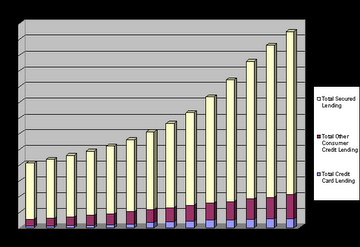
Total UK personal debt
http://www.creditaction.org.uk/debtstats.htm


Total UK personal debt in September will have exceeded £1 ¼ trillion for the first time. (1,85 billionen€, 2,36 trillion$)

At the end of August 2006 the total UK personal debt was £1,247bn. The growth rate increased to 10.4% for the previous 12 months which equates to an increase of £105bn.

Total secured lending on homes has exceeded £1 trillion (£1,000 billion) and in August 2006 it stood at £1035.4bn. This has increased 11.2% in the last 12 months.

Total consumer credit lending to individuals in August 2006 was £211.8bn. This has increased 6.6% in the last 12 months.

Total lending in August 2006 grew by £9.9bn. Secured lending grew by £9.1bn in the month. Consumer credit lending grew by £0.8bn.

Average household debt in the UK is approximately £8,575 (excluding mortgages) and £50,494 including mortgages.

Average owed by every UK adult is approximately £26,525 (including mortgages). This grew by ~ £200 last month.

Average interest paid by each household on their total debt is approximately £3,123 each year.

Average consumer borrowing via credit cards, motor and retail finance deals, overdrafts and unsecured personal loans has risen to £4,504 per average UK adult at the end of August 2006.

Britain's personal debt is increasing by ~ £1 million every four minutes.
Plastic card / Personal Loans:

Research by uSwitch has found that 3.4 million credit cardholders in the UK regularly make only the minimum repayment on their credit card. 11% of those with a credit card only ever make the minimum repayment – increasing to 18% for the 25-34 age group.

It has been estimated that in 2005 banks and finance companies sent 1.26billion items of junk mail such as credit card offers and invitations for loans. This equates to approximately 27 enticements to take on new credit per adult.

Credit card arrears rose consistently throughout 2005. The proportion of balances more than three months in arrears increased to 8.5%.

The number of people refused credit by mainstream lenders is estimated to increase from 9.1m in 2005 to 9.4m in 2010.

Total credit card debt in August 2006 was £55.4bn.

According to the BBA the proportion of credit card balances bearing interest was 74.6% in July 2006.

The average interest rate on credit card lending is currently 16.32 %, around 11.5 percentage points above base rate.

Plastic cards in issue were 183m in 2005. This works out at an average of 4 plastic cards for every adult in the UK.

The number of credit card holders who repaid in full each month the outstanding balance was 59% in 2005.

282 plastic transactions took place every second in the UK in 2005. There were 86 withdrawals made every second (equal to £5,455 / second) from UK’s 58,000 cash machines in 2005.

Debit cards accounted for 37% of all retail spend in 2005, ahead of cash at 34%. Plastic cards were used for 63% of all UK retail spending last year

There are more credit cards in the UK than people according to APACS. At the end of 2005 there were 74.6m credit and charge cards in the UK compared with around 60 million people in the country.

Servicing Debt
:

Homeowners could be at risk of getting into serious debt by over-committing themselves with loans and other forms of credit, say national charity Citizens Advice. A recent survey shows that some 770,000 people throughout Great Britain, with a mortgage have missed one or more mortgage payments in the last twelve months. The survey showed that younger people are more likely to have missed a mortgage payment, with 13% of 21-24 year-olds surveyed said they had missed one or more mortgage payments in the last twelve months. This suggests that some people who are new to homeownership may be getting straight into difficulties. http://immobilienblasen.blogspot.com/2006/09/great-britain-bubble-world-tour.html

The number of people hit with a County Court Judgement (CCJ) - ordering repayment of outstanding debts - has leapt by 18per cent. 165,000 people had CCJs imposed on them between April and June of this year, which is up by 25,050 on the same period in 2005. Lenders were aiming to recover around £½billion of bad debts through CCJs last quarter.

A recent report from Datamonitor reveals that the UK is responsible for a third of all unsecured debt in Western Europe and that the average UK consumer owes over twice as much as the average western European owes.

Over two million households are estimated to be struggling to pay council tax according to a new report for the Joseph Rowntree Foundation.

Approximately 9.8% of individuals consider unsecured debt to be a “heavy burden”. A further 31% saying they are keeping up, but struggle from time to time

One person is falling victim to insolvency every minute of the working day - 26,021 people became insolvent between April to June 2006 which is a 66% increase on the same quarter last year. The number of people becoming insolvent in 2006 is likely to exceed 100,000.

In the last four years the average age of a bankrupt has fallen from 43 to 41 and the proportion of younger bankrupts, aged between 18 and 29, has more than doubled.

According to recent research by a leading debt solutions consultancy, the number of consumers facing personal insolvency is growing fast. Of adults with a high level of unsecured debt (£10,000 or over), 20% of those interviewed said they were ‘quite likely’, ‘very likely’ or ‘certain’ to declare themselves bankrupt or take out an IVA (Individual Voluntary Arrangement). This equates to 1.1 million adults across Great Britain

The Bank of England raised the base lending rate to 4.75% in August 2006. This was the first increase for 2 years.

Citizens Advice Bureau (CAB) dealt with 1,128,000 debt enquiries last year. In the last decade the number of consumer debt problems dealt with by CAB has increased 118%. CAB clients have an average of £13,000 of debt which is nearly 17.5 times their monthly income. On average it would take CAB clients 77 years to pay back their debts in full.

The average debt of a client coming to Consumer Credit Counselling Service (CCCS) for advice is now £32,000. The number of people earning more than £30,000 a year who are asking it for help has risen by 257% in the past three years.

Three quarters (74%) of British couples find money the hardest subject to talk about with their partners according to a recent survey by the Financial Services Authority (FSA). They also found that over a quarter (27%) of couples regularly argue when they try to discuss their finances; about a third (32%) of couples lie to their partners about how much they spend on their credit cards; over a third (35%) of British couples are kept awake at night worrying about their money situation

Research from AXA shows money worries are a significant cause of worry, anxiety and stress according to GP and leading mental health expert, Dr Roger Henderson, who recently published a paper identifying the condition Money Sickness Syndrome (MSS). Almost half (43%) of the UK adult population is affected by money worries and have experienced MSS symptoms. 3.8m people admit money worries have caused them to take time off work and more than 10.76m people suffer relationship problems because of money worries, with almost one in five complaining of a sex life slump.

A quarter of those in debt are receiving treatment for stress, depression and anxiety from their GP.

Young people (under 30): Graduates leaving university this year had average debts of £13,252, a 5% increase on 2005, according to a survey by NatWest bank. 62% of graduates leave university with debts of over £10,000.

Sixth-formers heading for college this year expect to leave their courses with debts of nearly £15,000. For those starting university this summer, the biggest concern was money being tight. Students are now increasingly relying on part time jobs to finance their life at university. A massive 87% of this year’s intake believes that they will have to get a part time job and 46% of current students have to rely on their income from term time work to get by, working an average of 14 hours a week.

Recent research shows that budgeting is the last thing on many students’ minds as the vast majority (80%) of 16-24 year olds admit they don’t keep track of their finances. Also, despite the likelihood of being on a tight budget, 1 in 5 doesn’t know within £100 what their financial state might be.

A recent FSA report highlighted:

29% of 16-24 year olds said they would not know how to prepare and manage a weekly budget;
19% of 22-24 year olds have short-term debts over £5,000;
62% of young people said if they got into money trouble or debt they would not be able to name any advice or support services they could turn to for advice
One in five students dropped out of courses; Of undergraduates who considered dropping out financial difficulty was a strong factor for 34.4%;
94% of 16 year olds believe it is important to know how to manage money; only 53% have been taught how to

Pensioners / Pensions:

1.4 million pensioners (14% of the UK’s pensioner population) live on an income of £5,000 or less each year. After council tax, water and electricity bills, this leaves only £3,092 per annum – which is equivalent to £59.46 each week or £8.49 a day. More than 38 per cent (3.6 million people) get by on £10,000 or less, and over half of the British pensioner population live on £15,000 or less each year.

A major report published by Scottish Widows, reveals a dramatic deterioration over the last 12 months in the number of people saving adequately for retirement. The percentage of the population saving adequately for retirement falls from 55% in 2005 to 46% in 2006. The percentage of people who do not know where their main income in retirement will come from has almost doubled, and is now nearly a quarter of the population (23%)

Research from Scottish Widows Bank reveals one in six (over 1 million), pensioner homeowners in the UK have an outstanding mortgage on their home – each with an average debt of £45,313 – making a nationwide debt of almost £47 billion. What is more, one in three owe more than £50,000 and one in ten more than £100,000 putting increased pressure on retirement income.

Over 8 million British workers (21%) don’t have any pension provision according to a recent report issued by Virgin Money. This is despite continued warnings from the Government and the pension industry of the need to save now to avoid inadequate income at retirement.

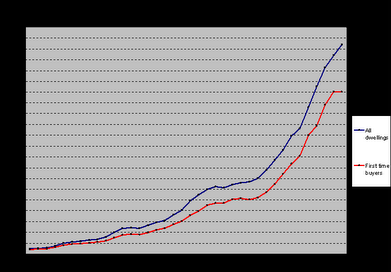
Housing: According to the Department for Communities and Local Government (DCLG) the average house price in the UK in July 2006 stood at £194,454 (£202,660 in England/300.000€/383.000$). UK annual house price inflation rose by 6.0%. Annual house price inflation in London rose by 7.1%
.

Note: the weightings used by DCLG were changed for the February 2006 figures.

The average Mortgage Interest rate at the end of August 2006 was 5.29%.

28% of mortgages taken out in July 2006 were “interest only” mortgages compared with only 12% taken out in June 2003. 22% of these “interest only” mortgages were taken out without a repayment plan specified to repay the capital.

According to the Nationwide house prices increased by 1.3% during September, bringing the annual rate up to 8.2% - its fastest annual rate of growth since February 2005.

The average loan approval for house purchases in August increase to £141,500, which is 8% higher than a year earlier.

According to The National Association of Estate Agents (NAEA) the average time between instruction and completion is 16.9 weeks.

Approximately 280,000 mortgages are one month or more in arrears. This represents an increase of 4% from the same period one year ago.

During the second quarter of 2006, 33,180 mortgage possession actions were entered, and a total of 22,254 orders were made – 11,020 of which were suspended orders. This is a 17% increase from the second quarter of 2005.

Gross mortgage lending hit a new record in August, reaching £32.7 billion, according to the latest data from the Council of Mortgage Lenders (CML). This is 21% higher than the same month last year.

The Council of Mortgage Lenders has revised up its forecasts for housing market activity for 2006 and 2007. The CML now expects house prices to end the year 7% higher than at the start, compared with a 2% forecast back in February. Next year, the forecast for house price inflation has been raised from 2% to 3%. (i bet against it, ich halte dagegen)

The amount of unmortgaged property wealth held by UK home-owners currently stands at £3.6 trillion. Housing equity is the largest component of total wealth held by people living in the UK. Mortgage lending has helped fund a dramatic expansion of home-ownership, from 60% to 70% of the population during the last 20 years. Roughly 40% of the housing stock is owned outright, mainly by retired and older middle-aged households,

Housing 1st Time Buyers:

The average house price in the UK in July 2006 for first time buyers now stands at £150,252 which is an annual increase of 5.6%.

Housing costs have risen sharply for first-time buyers: their average mortgage costs are now a third of average earnings. As a consequence a third of all working households under 40 cannot afford to buy even at the low end of local housing markets.

First-time buyer income multiples reached their highest level ever in July at 3.24 times the average income, according to the Council of Mortgage Lenders (CML). This was up from 3.06 times in the same month last year. The average new mortgage for first time buyers has now reached £110,500. The average age of a first-time buyer is 29
.

Half of parents feel responsible for helping their children on the property ladder. Parents intend to help their children onto the property ladder by giving them an average of £17,677. One in six are prepared to give or lend their offspring over £30,000.

The average couple needs to save at least £29,000 to pay for the deposit and stamp duty on their first home.

According to the National Association of Estate Agencies (NAEA) first time buyers accounted for 13.4% of properties purchased in August.

High Street Spending:

Britons now spend more on eating out in restaurants, pubs and on takeaway meals than on buying fresh and processed food and drink products to have at home. (until the easy money is gone, nicht mehr lange)

For the first time more than half of all adults made an online purchase during 2005 - 25 million or 52 per cent of all adults.

Parents typically spend £165,668 on raising a child from birth to the age of 21, according to friendly society Liverpool Victoria's most recent annual Cost of a Child survey. This works out at £7,889 a year and represents a rise of 7.8 per cent on last year's survey, more than three times the rate of inflation, and up 18 per cent on the 2003 survey.

The cost of running the average new car has grown to nearly £5,000 a year, or £14 a day, according to the latest RAC Cost of Motoring Index.

The average wedding costs around £19,595. 45% of couples - some 117,000 nationwide - have no financial planning to pay for the big day, a study by stockbrokers Brewin Dolphin Securities found.

Money Education / Financial Literacy:

Classes on personal finance and budgeting in schools could make children richer by up to £32,000 between the ages of 35-49 according to the Institute for Public Policy Research.

25 million Brits (56%) spend 60 minutes or less per week reviewing their finances, with the average amount of time we dedicate as a nation reaching only 1 hour 19 minutes – the least amount of time in Europe, according to a study from Scottish Widows. We spend nearly twice as long (2 hours 11 minutes) chatting on the phone or texting each week, and 6 times as long (8 hours 4 minutes) watching TV.(makes no fun to watch the debt, macht einfach wenig spaß die schulden anzugucken)

A quarter of Brits (25%) have no idea how much they spend in a week, and a similar number (26%) have no idea of their monthly cash flow. This lack of knowledge extends into other financial aspects of life. Only half (51%) the population know the balance on their credit cards and nearly half (46%) have no idea what interest rates they receive on their savings or are paying on their accounts and debts.

Around 15 per cent of 18 to 24- year-olds think an individual savings account (ISA) is an iPod accessory, and one in 10 reckon it's an energy drink. With rising personal debt levels in Britain, and a lack of long-term savings, better money management seems a pressing issue.

Savings:

A massive 72% of UK consumers believe they aren’t saving enough, but out of the people who are in a position to increase the amount they currently save, almost 8 million (18%) claim they enjoy spending their money too much to do so.

Halifax research shows that the UK saving ratio hit a four year high of 6.0% in Q1 2006. The household saving ratio measures the proportion of gross disposable income that households save rather than spend. The savings ratio has varied from a high of 14.1% in 1979 to a low of 3.1% in mid 2004 with a 7.8% average for the last 43 years.

Half the population (52%) could survive financially for just 17 days
, should they suffer an unexpected loss of income, according to research by Combined Insurance.

jan-martin

Monday, September 11, 2006

bubble goes global

hier nochmal ne schöne übersicht über das inzwischen wohl globale problem houisngbubble.
zu bedenken bei den angaben ist das die datenerhebung oft nur bis ende 2005 reicht und daher der erste downturn nicht enthalten ist. wie wir speziell aus den usa wissen ist dort der markt in q2 2006 ungebremst an die wand geknallt.

wie schon vermutet ist in der tat irland spitzenreiter was die inflationierung angeht.

was das ausmaß der blase in den usa verzerrt ist das besonders in den entscheidenden regionen der usa (küstenregionen und florida) die ausmaße locker mit denen in irland zu vergleichen sind.

besonders anfällig ist der us markt auch deswegen weil der bubble in erster linie auf hochriskanten finanzierungsformen basiert und die wirtschaftsleistung im gegensatz zu irland und anderen ländern weniger stark gewachsen ist.

fakt ist aber in den heißgelaufenen märkten das die ersten ernsten probleme im ersten halbjahr 2006 aufgetaucht sind. denke das diese risse nicht mehr zu kitten sind.

nochmal dank an the economist und tim http://themessthatgreenspanmade.blogspot.com/2006/09/home-price-stories-and-statistics.html


links zu irland:
http://immobilienblasen.blogspot.com/2006/09/irland-ireland-usa-reloaded-20042005.html
http://immobilienblasen.blogspot.com/2006/09/irland-ireland.html
http://immobilienblasen.blogspot.com/2006/08/irland.html, http://immobilienblasen.blogspot.com/2006/10/db-research-usuk-ie-esp-fra-dk-ger.html

links zu australien:
http://immobilienblasen.blogspot.com/2006/08/trouble-in-down-under.html
http://immobilienblasen.blogspot.com/2006/08/in-australien-haben-66-der-vermieter.html
http://immobilienblasen.blogspot.com/2006/08/zinserhhung-schlimmer-wie-terror-von.html, http://immobilienblasen.blogspot.com/2006/10/db-research-usuk-ie-esp-fra-dk-ger.html, http://immobilienblasen.blogspot.com/2006/10/housing-slump-in-us-versus-uk.html, http://immobilienblasen.blogspot.com/2006/09/wer-bietet-mehr-ltv-125-uk-buuble.html, http://immobilienblasen.blogspot.com/2006/10/australien-bauantrge.html

links zu uk
http://immobilienblasen.blogspot.com/2006/08/mehr-kreative-finanzierungsformen-uk.html
http://immobilienblasen.blogspot.com/2006/08/uk-bubble-kufer-fr-ne-wg-gesucht.html
http://immobilienblasen.blogspot.com/2006/08/uk-debt-that-never-dies.html
http://immobilienblasen.blogspot.com/2006/08/england-uk.html, http://immobilienblasen.blogspot.com/2006/10/db-research-usuk-ie-esp-fra-dk-ger.html, http://immobilienblasen.blogspot.com/2006/09/great-britain-bubble-world-tour.html, http://immobilienblasen.blogspot.com/2006/09/singapore-bubble-world-tour.html, http://immobilienblasen.blogspot.com/2006/10/uk-home-shortage-keeps-property-market.html, http://immobilienblasen.blogspot.com/2006/10/housing-slump-in-us-versus-uk.html, http://immobilienblasen.blogspot.com/2006/10/addicted-to-debt-uk-auf-den-spuren-der.html, http://immobilienblasen.blogspot.com/2006/09/wer-bietet-mehr-ltv-125-uk-buuble.html, http://immobilienblasen.blogspot.com/2006/09/wer-bietet-mehr-ltv-125-uk-buuble.html,

links to kanada, moskau, china, dubai .......
http://immobilienblasen.blogspot.com/2006/09/canada-kanada.html
http://immobilienblasen.blogspot.com/2006/09/moskau.html
http://immobilienblasen.blogspot.com/2006/08/bubble-in-china-shanghai.html
http://immobilienblasen.blogspot.com/2006/07/zur-abwechslung-mal-shanghai.html
http://immobilienblasen.blogspot.com/2006/09/dubai.html
http://immobilienblasen.blogspot.com/2006/07/spanien.html, http://immobilienblasen.blogspot.com/2006/09/polen-poland-bubble-world-tour.html, http://immobilienblasen.blogspot.com/2006/10/db-research-usuk-ie-esp-fra-dk-ger.html,


Tuesday, January 20, 2009

Pounding The Pound

The Queen is probably "not amused" .........


Sterling continued its slide on currency markets on Tuesday, dropping 2.7% on a trade-weighted basis amid uncertainty about the terms of the government insurance for toxic assets held by banks and fears of creeping nationalisation of the sector. Analysts said sterling had been trading with strong correlation with UK bank stocks, which suffered fresh falls. The likelihood that the Bank of England would soon create money to buy assets has intensified speculation that sterling’s value will be progressively eroded. This week, it has fallen 4.5% against the euro, 5.8% against the yen and 6.1% against the dollar, retreating about 34% against the dollar from highs in November 2007

A Tumbling Currency


> The following chart is a little bit outdated but gives a good impression what is going during the past 6 month..... See the FT link to take yesterdays action into account.....

> Der nachfolgende Chart beiinhalted noch nicht die Bewegugen siet Beginn der Woche......Verweise auf den FT Link für die aktuellen Absicherungspreise....

CDS report: Sovereigns rattle markets
The cost of buying five-year credit protection on the UK gapped wider to 133bp on Tuesday, compared to Monday’s close at 124.9bp. Ireland was out at 281bp from 275.2bp yesterday, Spain was at 156.3bp, compared to 142.5bp, Austria climbed to 157.5bp from 146bp and Germany edged wider to 55.8bp from 55bp on Monday, according to CMA.

The UK has nothing left to sell, official

To quote Jim Rogers (he who broke the Bank of England with George Soros on Black Wednesday in 1992): “It’s simple, the UK has nothing to sell.”

Ambrose Evans-Pritchard is SERIOUSLY ALARMED

For the first time since this crisis began eighteen months ago, I am seriously worried that British government is losing control.

If the Government is forced to nationalise RBS and perhaps Barclays with their vast exposure in dollars, euros, and yen, it risks being submerged. It is one thing for a sovereign state to let its national debt jump in a crisis — or a war — perhaps even to 100pc of GDP. It is another to take on foreign debts on such a scale with no reserves. Yes, the banks have foreign assets as well to match the debts. But how much are these assets really worth?

We cannot even do what Iceland did to save its skin. Reykjavik refused to honour the foreign debts of its buccaneering banks. It let them default, parking the losses in Resolution Committees. Small islands can do that. Iceland has fish instead, and lots of metals

England has not defaulted since the Middle Ages. There is a real risk it may do so now.

RBS et mon droit: HM deficits
Did you know that by assets, RBS is the world’s largest company?

Naturally, the UK government is rather keen RBS does not fail. And indeed, it has gone all out. Just about every conceivable measure has now been thrown down to stave off disaster for the UK banking system: recapitalisation, asset guarantees, commercial paper guarantees, liquidity backstops, quantitative and qualitative easing and subversion of Basel II risk weightings.

The hope is that they will work. Clearly RBS’s shareholders don’t believe so. It would seem that they are discounting for the effect of the one policy option remaining: Nationalisation.

Nearly matching RBS’ £1.9 trillion of assets, RBS has £1.8 trillion of liabilities.

To put that into perspective with regard to the (small) risk of nationalisation: inclusive of the Northern Rock nationalisation, the UK public debt, defined by the ONS, is currently only £650bn. Nationalising RBS would increase UK public debt 369 per cent.

A couple of other pieces of info for UK Plc: the world’s third largest organisation by assets is Barclays. And the fourth is HSBC.

UPDATE Bloomberg Barclays Falls Seventh Day on Nationalization Fears

> After looking at the next graph it not surprising that the BOE is now ready to use "unconventional measures"....

> Nachdem man einen Blick auf die nächste Grafik geworfen hat ist es nicht weiter verwunderlich das die BOE demnächst die Notenpresse anschmeissen wird........

IMAGE
Bank of England to Start Quantitative Easing Naked Capitalism

In his first speech of the year, Mr King outlined radical plans for the Bank to buy up an initial £50bn of illiquid assets in the market to increase the flow of credit, with the option of ex-tending the scheme to boost the money supply by effectively creating new money.

> Probably no surprise Gold in Pound is at a historic high & that the the flight to "the real money" around the globe continues .....

> Sicher kein Zufall das ausgerechnet in diesen Zeiten Gold in Pfund gerechnet neue historische Hochs erklimmt & die Flucht in "wahre Werte" weltweit anhält .......

IMAGE
Thanks to Tim from The Mess That Greenspan Made

Just in time to "celebrate" Gordon Brown´s wisdom ( see Gordon Brown's 415 tonnes Gold Sale Blunder, 10 Years On ) & Times

Da paßt es gut das der jetzige Premierminister Gordon Brown vor ziemlich genau 10 Jahren 50% aller britischen Reserven zum absoluten Tief verscherbelt hat ( Times )

Brown offloaded the gold at a 20-year low in the market — now nicknamed the “Brown Bottom” by dealers. The 17 auctions achieved prices for the gold of between $256 and $296 an ounce, with an average of $275.

Couldn´t resist......... Konnte einfach nicht widerstehen.........

> Needless to say that the UK has still a AAA rating...... I wouldn´t be surprised to see "The Sex Pistols" with their "Anarchy In The UK" to get quite popular again..... :-)

> Überflüssig zu erwähnen das UK immer noch ein AAA Rating hat....... Ich persönlich würde mich nicht wundern wenn wir zukünftig die Sex Pistols mit "Anarchy In The UK" demnächst wieder öfter zu hören bekommen...... :-)

AddThis Feed Button


Labels: , , , , , ,

Monday, June 29, 2009

UK CRE Now Off 45 Percent From The Peak.......

Could be worse if you are a foreign investor..... The British Pound is 20 percent off against all other major currencies over the past 12-18 months.....

Wenn man jetzt noch bedenkt das das britische Pfund gegenüber allen relevanten Währungen auf Jahressicht über 20% verloren hat sieht die Lage für ausländische Investoren noch düsterer aus...... Der Sektor der gewerblichen Immobilien dürfte schon sehr bald die Schlagzeilen mit spektakulären Pleiten dominieren..... Mich wundert das die in Deutschland dominierenden offenen Immobilienfonds ( etliche mit signifikanten UK Exposure siehe Chart Geographische Verteilung der Objekte In Offenen Immobilienfonds via FAZ/Scope ) trotz einer regelrechten Implosion im gesamten Sektor ( plus der teilweise drastische Währungseffekt in UK & Osteuropa ) querbeet über alle Regionen es noch immer schaffen keine Verluste auszuweisen...... Denke das spätestens wenn die Mieterneuerungen anstehen die ein oder andere Überraschung "droht".....


“Losses on UK commercial real estate could equal subprime” FT Alphaville BNP Paribas analysts are worried about the health of the UK’s commercial real estate sector. In a note released on Friday, they warned that a “combination of rising vacancy rates, falling rentals and extraordinarily difficult financing conditions will almost certainly drive UK CRE losses higher.”

Analysts Vivek Tawadey and Olivia Frieser contend that CRE is the “next leg of the credit story” in both the US and the UK, which they believe could see a major CMBS default.

From the note (any emphasis FT Alphaville’s):

Bonds backing CRE assets of a UK property investor (Simon Halabi) are likely to default on £1.15bn of debt. In this particular case, the values of the nine “prime” London office buildings (included the offices of JPM, the UK headquarters of Aviva, the Naval and Military Club amongst others) that were securitised have fallen from £1.8bn in November 2006 to £929mn as of 8 June, a reduction of almost 50%.

According to IFD, UK commercial properties values have been declining fast with peak to current declines of around 45%, with major declines noted in all major segments - retail, offices and industrials

At the same time the amount of available floor space for occupation increased at the fastest pace since 1999 in all regions with the exception of London (Chart 2) and thevalues of inducements rose at its fastest pace since the survey’s history in 1999. Collectively this implies that an upward correction in prices in the foreseeable future is unlikely.

BNP Paribas chart of available floor space in the UK

> I would love to see a similar stat for Dubai ( see The Upcoming Skyscraper Tsunami..... )

> Ich würde liebend gerne eine ähnliche Statistik für den Markt in Dubai sehen ( siehe The Upcoming Skyscraper Tsunami..... )

Tawadey and Frieser also point to the refinancing risk ahead:

Around £43bn (or 19%) of all CRE loans comes due for repayment in 2009. A further 14% matures per year annually in 2010 and 2011 (Chart 3) or in excess of £100bn over the next 3 years, implying very significant refinancing risk inevitably leading to higher defaults.

BNP Paribas chart of the refi risk in UK CRE

The fact that only 10% of CRE loans are securitised in Europe (US: 30%), also underscores that more of these loans are held on bank books, leading to potential write-downs down the line.

S&P On US CMBS / CRE FT Alphaville

The agency wants CMBS credit enhancement levels sufficient for AAA-rated tranches to be able to withstand some pretty severe declines (40 to 50 per cent) in the value of commercial property.

> So it looks like 50 percent off is the new normal...... And watching the next graph ( HT Zero Hedge ! ) i´m not sure if this will be enough..... Needless to say that the Fed just a few weeks ago has proposed a CRE TALF program to buy tons of this crap ( No Kidding..... S&P Is Acting Responsible & Threatens To Blow Up Fed´s CRE Bailout Stunt Via TALF ). It will be fun to watch how they will go along with the collateral criteria..... They already have loosened it once ( see ( see Fed Bends Over Backward For CMSA, Will Feed Inflation Capacitor With More Toxic Garbage via Zero Hedge ). .....

> Sieht ganz so aus als wenn eine coole Halbierung vom Top in den ehemals heißgelaufenen Märkten eher die Regel als die Ausnahme ist....... Bin mir sicher das Banken in Ihrer bekanntermaßen vorausschauenden Weitsicht hierfür ausreichend "Vorsorge" getroffen haben..... Wenn man sich jetzt die nächste Grafik ( Dank an Zero Hedge ) ansieht dürfte klar werden was sich für ein Debakel zusammenbraut....... Möchte nur noch mal zur Belustigung darauf hinweisen das die Fed vor wenigen Wochen extra ein TALF Programm gestartet hat um für wahrscheinlich bis zu 100 Mrd $ den Giftmüll zu kaufen ( siehe No Kidding..... S&P Is Acting Responsible & Threatens To Blow Up Fed´s CRE Bailout Stunt Via TALF ) ...... Bin gespannt wie weit die Fed noch sinken kann....Bisher hat Sie bereits einmal die Bedingungen für die Sicherheiten gelockert ( siehe ( see Fed Bends Over Backward For CMSA, Will Feed Inflation Capacitor With More Toxic Garbage via Zero Hedge ).......

UPDATE :

Graph
European Top 20 From JPM’s CRE Risk List

( Note: Data from end of 2008! )

Labels: , , , , , , , , ,

Wednesday, October 24, 2007

BOE Says Banks Vulnerable to `Shocks' After Credit Collapse

Looks like the BOE ( and other central banks) will have do to some more bailouts like they did with Northern Rock..... Should be no problem in times when their credibilty is no longer vulnerable ( already gone) .... ;-)

Sieht ganz so aus als wenn die BOE ( und andere Notenbanken weltweit ) zukünftig noch weitere Bailouts wie bei Northern Rock befürchten muß.... Nachdem die Glaubwürdigkeit eh schon arg angekratzt und kaum noch vorhanden dürfte das nicht weiter schwierig werden..... ;-)

BOE Says Banks Vulnerable to `Shocks' After Credit Collapse
Oct. 25 (Bloomberg) -- The Bank of England said the global financial system is at risk of further instability because of ``ongoing uncertainties'' about credit-market losses.

The central bank said in its financial stability report today that markets are now more susceptible to a potential slump in global stocks, a slide in the dollar or a crash in U.K. commercial property after the U.S. subprime mortgage collapse. Merrill Lynch & Co. yesterday reported the biggest quarterly loss in its 93-year history after $8.4 billion of writedowns.


> I highly recommend to read The Role of CDOs in Merrill's Losses (Updated and Expanded Version) from Naked Capitalism

> Kann dazu jedem The Role of CDOs in Merrill's Losses (Updated and Expanded Version) von Naked Capitalism ans Herz legen

``Financial systems in advanced economies are vulnerable to further shocks, either in credit markets or from new sources,'' the Bank of England said in its semiannual report.

Investors are assessing the fallout from a credit-market rout that led to a surge in borrowing costs and a run on the deposits of U.K. mortgage lender Northern Rock Plc. Today's report said British banks are still hoarding cash to protect their balance sheets, which may keep credit conditions ``tight'' into next year and make it harder for some borrowers to manage debt.

While the central bank said ``there have been signs of recovery'' in money markets, the interest rate that banks charge each other for three-month loans hasn't returned to the level before credit costs surged on Aug. 9. The London interbank offered rate, which was 6.05 percent at the start of August, was 6.28 percent yesterday. It touched a nine-year high of 6.9 percent on Sept. 11.

Crisis Management
In a worst-case scenario, U.K. banks would have to raise as much as 170 billion pounds ($348 billion) if market conditions prevented them from selling the loans on their balance sheets to other investors, the central bank said.

The Bank of England, which had been criticized for not doing enough to help lenders after markets seized up, also said U.K. authorities need to ``strengthen their crisis management arrangements.'' Lawmakers will question Chancellor of the Exchequer Alistair Darling on the U.K. government's role in the affair at 11 a.m. in London today.

``Some important lessons need to be learned by both financial institutions and authorities,'' Bank of England Deputy Governor said John Gieve in a statement. His handling of the Northern Rock crisis was singled out for criticism by members of Parliament last month.

Highlighting the risks to global financial stability, the Bank of England said a slump in U.S. economic growth may spark a further drop in ``asset prices'' that ``could trigger a sharp decline in the U.S. dollar.''

> They don´t need to point fingers to the US..... It looks like the debt problem is also spreading to UK corporations...... Easy to figure out what will happen when the economy slows and the credit is less plentyful....

> Hier muß man nicht auf die USA zeigen..... Es sieht so aus als wenn die Kreditprobleme in UK so langsam aber sicher auch die angeblich so soliden Firmenbilanzen betreffen.... Unschwer zu erahnen was passieren wird wenn die Konjunktur ernsthaft ins stocken kommt und die Kreditklemme so richtig zum tragen kommt......
Debt Burden
The U.S. currency has declined 8 percent against the pound in the past year and dropped to a 26-year low of $2.0654 on July 24.

The central bank also said a slowdown in world growth may hurt global stocks and that it's concerned about a potential decline in U.K. commercial property prices.

>LOL! I agree that they should worry about commercial property ( see Commercial property "View from the top" / Economist ). But the far bigger problem is the residential market. Just click here and you will see unlike lots of BOE members the white elefant in the room .....I highly recommend to read Oh no, it can't happen here where Alice Cook from The UK Housing Bubble takes on the view of Kate Barker, who sits on the Bank of England's monetary policy committee..... Looks like the BOE members are as smart as the Fed members....

> Schon lustig.... Ich stimme überein das sich der gewerbliche Immobiliensektor zweifelsfrei jenseits von Gut und Böse bewegt (siehe auch Commercial property "View from the top" / Economist) Aber das eigentliche Problem liegt doch eindeutig im privaten genutzten Immobilienmarkt. Um das auf einen Blick zu erkennen braucht man sich nur diese Daten und Fakten vor Augen zu halten. Ich kann jedem raten sich den nachfolgenden Link durchzulesen.Oh no, it can't happen here . Hier betrachtet Alice Cook vom The UK Housing Bubble was Kate Barker, ein Stimmberechtigtes mitglied des Bank of England's monetary policy committee zu diesem Thema zu sagen hat..... Man fragt sich schon welche Voraussetzungen man erfüllen muß um in diesen Ausschuß zu sitzen.....

The burden on British households, which have taken on a record 1.4 trillion pounds of debt, is increasing along with credit costs, the Bank of England said today. First-time buyers of residential property and investors that purchased homes to rent them out to tenants are ``particularly exposed,'' the report said.

Still, U.K. commercial banks' earnings and their capital reserves have helped them cope with the market rout, the bank said. ``Robust'' economic growth ``and the high profitability and capitalization of major U.K. banks provide a strong anchor for the financial system.''

The report also said the market selloff may be welcome because investors were taking too-optimistic a view on the risks facing the global economy.

``A return to earlier conditions would be undesirable as that involved an underpricing of risk,'' the Bank of England said.

AddThis Feed Button

Labels: , ,

Wednesday, August 08, 2007

U.K.'s Subprime Crisis May Be Worse Than U.S.'s

This could have been a good report from Matthew Lynn .... Could have been..... Too bad that this is the same guy that just 6 month ago wrote this almost comical piece Mad London House Prices? We've Seen Nothing Yet with quotes like.....

Das ganze hätte ein echt toller Bericht von Matthew Lynn werden können ... Wäre da nicht der schon fast genial komische aber leider ernst gemeinte Bericht vom Januar 2007 Mad London House Prices? We've Seen Nothing Yet mit Aussagen wie den folgenden gewesen....

  • Don't be surprised if the capital's fevered property market doubles in value before this boom runs out of steam

  • ``London and the South East have a lot of catching up to do over the next few years,.....``They have underperformed the rest of the country.''

  • Well, think again. The latest round of London property inflation has probably only just begun

  • London real estate has lagged behind most of the U.K. for the best part of this decade. And right now it is being revalued.

  • Measured against those sorts of gains, the escalation in London house prices looks relatively calm
On top of this he has put up such estimates like this one (which i deleted )

Hinzu kommt das er doch tatsächlich auf schlicht volkommen wahnwitzige Schätzungen in seinem Bericht erwähnt ( habe ich im übrigen vorsorglich gelöscht)

  • First, despite the mounting evidence that people can't afford them, house prices continue to soar. The National Housing Federation predicted this week that British house prices will rise 40 percent in the next five years, taking the average value of a home to 302,400 pounds ($618,000) by 2012.
So make sure that when you see a column from this guy be careful........

Solltet Ihr also mal wieder was von diesem Typen auf Bloomberg lesen nehmt das ganze mit einer großen Portion Skepsis auf....
Aug. 8 (Bloomberg) -- We are now all familiar with the damage that can be done to financial markets by a subprime lending crisis. Global equity markets have taken a battering recently because of concerns about U.S. home mortgages.

So which country is next?
The U.K. has had a property bubble every bit as crazy as the U.S.'s. Valuations were stretched, and lending criteria loosened. And now arrears are starting to rocket, even while the economy remains healthy.

Not only does the U.K. face its own subprime crisis, it could be far worse than in the U.S.

The latest figures on debts and mortgage arrears in the U.K. certainly make grim reading. Households ``are getting into more trouble when it comes to their mortgages,'' London-based consulting firm Capital Economics Ltd. said in a note to investors. ``With higher interest rates yet to have their full effect, mortgage arrears are likely to rise further, while unsecured bad debt might start to rise again too.''

The signs of trouble ahead can be seen in the number of homes now being repossessed because their owners can't keep up the payments. According to the Council of Mortgage Lenders, lenders foreclosed on 14,000 properties in the first six months of the year, 30 percent more than in the year-earlier period. That reflected ``the impact of an increasing amount of subprime lending within the overall market,'' the council said in a statement on the figures.

Britons in Debt
Arrears aren't in great shape either. An estimated 125,100 households are behind with their mortgage payments, about 1 percent of the total, according to the council. Home owners behind with the payments will have their homes repossessed a few months down the line, unless their finances improve.

The wider picture of indebtedness isn't much more comforting. The British are deeper in the red than any other major economy. According to data from the National Institute of Economic and Social Research in London, the ratio of household debt to personal income is 1.62 in the U.K., compared with 1.42 in the U.S., 1.36 in Japan and 1.09 in Germany.

The U.K. is now facing a subprime crisis on a similar scale to the U.S. As anyone who has taken out a mortgage in Britain will know, banks shovel out money without asking many questions. A review by the U.K.'s Financial Services Authority last month criticized reckless lending in the subprime sector, which has, it said, ``resulted in the approval of potentially unaffordable mortgages.''

No Proof of Income
The British market doesn't fall neatly into ``prime'' and ``subprime'' categories. Most of the mainstream lenders offer so- called self-certified mortgages, which require no proof of income. Plenty of prime borrowers -- meaning people who haven't defaulted on a loan yet -- are likely to take out mortgages that will be hard to make the payments on.


The U.K. subprime crisis may be a lot nastier than the U.S one. Here's why.

First, despite the mounting evidence that people can't afford them, house prices continue to soar. ....

Rate Differences
Next, U.S. interest rates may have reached their peak and could soon fall. In the U.K., that isn't the case. The Bank of England is likely to raise borrowing costs at least once more to 6 percent. If the housing market and general inflation don't show any sign of responding to that treatment, interest rates could go higher still. That won't help borrowers already hard-pressed to make their payments.
There should be two self-correcting mechanisms for fixing a subprime crisis in the housing market. House prices should gently fall, making properties more affordable, and reducing the size of loans. And interest rates should stabilize or fall, making the payments on those loans easier to maintain.

Neither seems to apply in the U.K.
Instead, interest rates are rising and so are house prices. The result is that thousands of families are left in a vulnerable position -- and so are the banks that have lent them money (not to mention the investors who have bought those loans as they have been sold on).

Just Walk Away
While the property market rises, everyone will be safe. If your house is worth more than your mortgage, you will be desperate to hold on to it. If you get into trouble, you can always sell it, repay the loan, and move somewhere cheaper.

Yet, as the U.S. has discovered, if house prices start to fall, that arithmetic changes. If you are in trouble with your mortgage, you can't pay it off by selling. There is little incentive to keep up the payments. Why not just walk away, and hand the keys and the problems over to the mortgage company?

Britain hasn't reached that point yet. But if it does, the mess could be even worse than in the U.S.

Disclosure: Short Pound vs €
AddThis Feed Button

Labels: , , ,

Sunday, February 03, 2008

UK : Egg/Citigroup Clamps Down On Riskier Credit Card Customers

Probably no coincidence that Citigroup is forced to make the move first and one of the largest US pawnbroker & payday lender is entering the market at the same time..... Once again their risk modeling wasn´t quite perferct...... How can you buy a UK credit card company close to a top in the UK housing market...... But i think it is very safe to say that others will have to follow ( not only in the UK ) Citi in this kind of tightening.....I suggest to read this Total UK personal debt statistic February 2008 from Credit Action to understand the magnitude of the mess especially in UK .

Sicher kein Zufall das ausgerechnet Citigroup den ersten Schritt machen muß und gleichzeitig das größte US Pfandleihaus & einer der größen "Kredithaie" in den UK Markt eintritt..... Es sieht so aus als wenn die mal wieder genau zum Top eine riskante Investition getätigt hätten.... In diesem Fall bin ich mir sicher das Citi mit diesem Schritt nicht lange alleine bleiben wird. Andere Anbieter ( auch länderübergreifend ) werden sich dieser Art der Kreditverknappung anschließen müssen.... Um einen Überblick über das Ausmaß gerade in UK zu bekommen empfehle ich einen Blick auf diese Übersicht Total UK personal debt statistic February 2008 von Credit Action zu werfen.

This quote sume it up / Dieses Zitat spricht Bände

"We can certainly understand the concerns, but even if people are up-to-date with repayments, they are people we decided we no longer wish to lend money to regardless of their status." Egg spokesman


Egg customer anger at credit move BBC
Angry customers of internet bank Egg have hit out at its decision to cancel their credit cards.

Egg says 161,000 cards belonging to people whose credit profiles have deteriorated since they signed up will stop working in 35 days' time.

But people who insist they have good records have been contacting the BBC to say they are on the list.

A spokesman for the bank said those affected were customers it no longer wanted to lend to "regardless of their current status".

Credit cards are being withdrawn from 7% of Egg's customers who it deems to pose an unacceptably "high risk".

This could include those who have missed repayments or exceeded their credit limit.

'Arbitrary action'
Cardholders will be able to continue making minimum monthly repayments on their balances but will not be able to spend any more after the deadline.

The move follows a "one-off" review after Egg was bought by US-based Citigroup for £575m last year.

The bank is not demanding immediate repayment of balances or making any changes to customers' terms and conditions or their interest rates. ....

Gillian Cox, of Farnham, Surrey, said she was "absolutely furious" to learn her credit card had been cancelled in what she described as an "unbelievable arbitrary action".

Mrs Cox said she and her husband are "retired, no mortgage, no debts" and "always paid the balance off in full each month".

She added that she had contacted credit reference agency Experian who said she was marked as having an excellent credit rating, "thus totally negating Egg's claim that this measure is about credit risk".

'Stop spending'
A spokesman for Egg said: "We are sorry some customers are upset after receiving notification we are ending their credit card arrangement, but they are people we do not feel it is appropriate to lend any money to."

He added: "The decision was taken after an extensive one-off review of our credit card book following acquisition by Citigroup."

Der Spiegel London - Die Internetbank Egg greift durch. Die britische Citigroup -Tochter will rund sieben Prozent ihrer zwei Millionen Kunden die Kreditkarte sperren. Offenbar haben es Egg und Mutterkonzern Citi mit der Angst zu tun bekommen - sie fürchten, die Risikokunden könnten sich übernehmen und ihre Darlehen nicht zurückzahlen können. Offiziell heißt es: Das Kreditrisiko der "riskanten" Kunden sei zu hoch.

Egg teilte zwar mit, der Schritt habe nichts mit der weltweiten Kreditkrise zu tun. Es handele sich bloß um eine "Neubewertung der Risiken", nachdem Egg im vergangenen Jahr von der Citigroup gekauft worden war. Die Maßnahme zeigt aber, dass Banken weltweit konservativer bei der Darlehensvergabe werden und hart gegen Risikokunden durchgreifen.

Die Egg-Mutter Citi hatte sich bei riskanten Kreditgeschäften so sehr verhoben, dass an den Finanzmärkten sogar zeitweise Insolvenzgerüchte zirkulierten. Citi hat im Zuge der Kreditkrise mehr als 18 Milliarden Dollar abschreiben müssen und damit einen Verlust im vierten Quartal von rund zehn Milliarden Dollar verbucht. Mit der Wahrheit über das Ausmaß der Krise rückte Citi nur scheibchenweise heraus. Egg will die Karten innerhalb von 35 Tagen sperren, die Kunden wurden bereits angeschrieben.

AddThis Feed Button

Labels: , , , , , , , , ,