Thursday, February 14, 2008

Securitisation "Fear and loathing, and a hint of hope" Economist

Nice summary from the Economist. I´m pretty sure that lots of this financial alchemy will never return to the markets. At least for a few years........ ;-) . Here is an excellent take via Naked Capitalism Securitization Reform: Don't Hold Your Breath

Nette Zusammenfassung vom Economist. Bin mir sicher das wir einen Großteil dieser Finanzakrobatik demnächst nicht mehr ertragen müssen. Zumindest für einige Jahre..... ;-) . Hier ein extrem lesenswerter Artikel von Naked Capitalism Securitization Reform: Don't Hold Your Breath


Economist Not all is lost for the structured-finance business. But it faces further discomfort before it can start to recover some of its past sheen

The limits of gonzo finance
Securitisation has greatly enhanced the secondary market for loans, giving originators, mainly banks, more balance-sheet flexibility and investors of all sorts greater access to credit risk. Both have embraced it. By 2006 the volume of outstanding securitised loans had reached $28 trillion (see chart 1). Last year three-fifths of America's mortgages and one-quarter of consumer debt were bundled up and sold on.


Along the way, banks cooked up a simmering alphabet soup. The ingredients included collateralised-debt obligations (CDOs), which repackage asset-backed securities, and collateralised-loan obligations (CLOs), which do the same for corporate loans, as well as structured investment vehicles (SIVs) and conduits, which banks used to keep some of their exposure off their balance sheets.

The breakneck growth of this business went into reverse last summer, when it became clear that defaults would undermine the structures built around America's mortgage markets. So tarnished has the subprime-mortgage market become, because of shoddy loan underwriting and fraud, that investors are likely to shun securities linked to it for months if not years. Securitisation of better-quality “jumbo” mortgages—too big to be bought by government agencies—is also at a near-halt. “Mortgages were traditionally seen as very safe assets. Now all but the very best are stamped with a skull and crossbones,” says Guy Cecala, of Inside Mortgage Finance, a newsletter.

CDOs are unlikely to regain a following in a hurry (see chart 2). Still less popular are CDO-squareds (resliced and repackaged CDOs) and higher powers. CLOs have also been battered as the leveraged loans they are linked to have tumbled in value. However, their collateral is sounder than that backing subprime CDOs, being based on company financials rather than the blandishments of mortgage brokers.


The prospects for SIVs are bleaker still. SIVs borrow short-term to invest in long-dated assets; and investors will no longer tolerate such mismatches in vehicles shielded from standard banking regulation. With the disappearance of the SIVs' funding sources, notably asset-backed commercial paper, banks had to bring over $136 billion-worth onto their books. That comes on top of over $160 billion, so far, of subprime-related write-downs, over a third of which has come at three banks: Citigroup, Merrill Lynch and UBS.

Though few bankers worked in structured finance, it was a huge earner, accounting for 20-30% of big investment banks' profits before the crisis, according to CreditSights, a financial-research firm. Banks such as Bear Stearns, Lehman Brothers and Morgan Stanley, which bought or built mortgage-origination businesses to fuel the securitisation machine, have rushed to close or pare them. Merrill, whose fees from CDOs alone peaked at $700m in 2006, said recently that it would stop packaging mortgages altogether.

Alongside the banks, the “gatekeepers” who were supposed to lend stability and credibility to the new originate-and-distribute model of finance have also been found wanting. Rating agencies' models underplayed the risk that loans from different lenders and regions could turn sour at the same time. Bond insurers, too, misjudged the risks lurking in CDOs. That failing has undermined the worth of their guarantees and strained their own credit ratings—and hence financial markets.

George Miller, the ASF's executive director, accepts that this crisis of confidence will lead to a degree of “re-intermediation” for a time, as some banks go back to balance-sheet lending. But he insists that it highlights the dangers of lax lending standards in a particular market rather than fundamental faults in securitisation itself.

A study by NERA, an economic consultancy, commissioned by the ASF before the crunch, offers some support for this view. Preliminary results, based on data from 1990 to 2006, suggest that increased securitisation leads to lower spreads in consumer credit and softens interest-rate shocks for banks, especially smaller ones. On the other hand, in a recent paper two economists at the University of Chicago's business school conclude that securitisation encouraged mortgage originators to lend to dodgy borrowers.

Stresses and strains
What is not in doubt is that the subprime crisis has exposed four deep flaws in the practice of securitisation. The first is that by severing the link between those who scrutinise borrowers and those who take the hit when they default, securitisation has fostered a lack of accountability.

A debate has been rumbling over how to ensure that lenders have more “skin in the game”. Some think they should set aside a sliver of capital even for loans they sell on. Andrew Davidson, a structured-finance consultant, suggests an “origination certificate”, guaranteeing the quality of the underwriting, issued by the lender and broker, which stays with the loan. Alex Pollock of the American Enterprise Institute thinks that securitisers should be required to guarantee the quality of their loan pools, as are America's government-sponsored mortgage giants, Fannie Mae and Freddie Mac. Others counter that most such exposures can be neutralised these days through derivatives markets.

The second flaw is the sheer lack of understanding of some instruments. Not long ago investors took too much on trust. They are now clamouring for more “transparency”. Some want a central trade-quoting facility for lumpy asset-backed products: regulators have approached the New York Stock Exchange. CME Group, which runs the world's largest futures exchange, is also looking to expand its clearing of over-the-counter securities.

Yet reams of information already accompany mortgage-backed securities sold in public markets. Even SIVs provide a steadier stream of data to investors than most of the banks backing them. So some interpret calls for greater disclosure as whimpering by investors who did not do their homework.

However, more information about the performance of loans after origination would help, particularly those in leveraged structures such as CDOs. This opens up opportunities: fewer banks were at the ASF conference this year, but more data-analytics firms turned up. Clayton, the largest mortgage-surveillance company, unveiled a partnership with Experian, an information-services firm, that will help mortgage-servicers to package subprime loans for modification under a plan backed by the ASF and America's Treasury. Later, it hopes to offer a swathe of data to buyers of structured products.

Understanding the underlying assets is, or should be, at the core of securitisation. Securitisation is really an arbitrage: with surplus collateral, assets can be bundled into an entity with a supercharged credit rating. But if investors fail to spot the jiggery-pokery with credit scores and the outright fraud that permeated the subprime market, that cushion of safety quickly disappears. Witness the speed with which losses have spread into supposedly safe, “super senior” tranches of CDOs.

This points to the third flaw: that some securities were poorly structured, often because their risks were not fully understood. The upper layers of a well-designed securitisation vehicle should be all but impervious to loss. But poorly structured deals, like those stuffed with subprime and marginally less iffy “Alt-A” loans in 2006 and early 2007, have crumbled as the weakness of the collateral becomes clear.

The fourth flaw was the market's over-reliance on ratings as a short cut to assessing risk. In the go-go years, people wrongly assumed that an AAA-rated mortgage bond—even one with a high yield—would never lose value. But the rating agencies, paid for their appraisals by the seller not the buyer, were compromised from the start. Moreover, their quantitative models appear to have ignored “fat-tail” risks—the possibility that large losses are likelier than standard statistical models predict.

Though the agencies do not have to suffer giant write-downs, they have paid a high price. Before the market imploded, almost half the revenue of Moody's, a leading agency, came from structured finance. Now the agencies are revising their rating criteria in a bid to head off tougher regulation. “Either deals get less complex or we have to find a better shorthand for measuring risk,” says Ron Borod of Brown Rudnick, a law firm. The rating agencies say they were never supposed to substitute for investors' own due diligence. That is disingenuous, given their past self-assuredness. Still, wise investors will take future ratings with a pinch of salt, as most hedge funds have long done.

As the market grapples with change, some is likely to be imposed from above. Separately, international regulators and the President's Working Group (comprising America's Treasury, the Federal Reserve and others) are looking into securitisation's part in the crisis. By co-operating over loan modifications, the ASF may have gained favour with the working group.

The industry is more worried about two bills in America's Congress. Securitisers can live with much of the one that has been passed by the House of Representatives. What alarms them is an “assignee liability” provision that would hold them partly responsible for lax lending by originators. This, they say, would send a chill through secondary markets, cutting credit to thousands of worthy borrowers. Precedent is on their side. Georgia introduced assignee liability, only to back-pedal after the state's subprime market started to seize up. Not all bankers are against it: in Las Vegas, Bianca Russo of JPMorgan Chase argued that some form of it was needed to counter the perception, if not the reality, that securitisation was harmful.

The other bill would allow bankruptcy judges to alter the terms of struggling borrowers' mortgages. The industry argues that this would be an intolerable violation of the sanctity of loan-pooling contracts. In addition, securitisers face probes by several state attorneys-general, the Internal Revenue Service, the Federal Bureau of Investigation, the Securities and Exchange Commission and the Justice Department, as well as lawsuits from investors and a rising number of stricken municipalities.

Bankers will tell you that the subprime meltdown was just that: the product of irresponsible lending to, and borrowing by, flaky consumers, not a broader crisis of securitisation. Maybe, but the severity of the credit crunch points to broader pain ahead. More will come from housing: much of the 30-40% of American home-equity loans that have been securitised looks wobbly, as does a growing chunk of the $800 billion of Alt-A paper outstanding. Loans for offices are an even bigger worry. The spread on the AAA tranche of an index tracking bonds backed by commercial mortgages has tripled since the turn of the year. New issuance is frozen.

Trouble is also brewing for securities tied to non-mortgage consumer assets, such as credit-card debt, car loans and student loans, which make up a good slice of the asset-backed market (see chart 3). Credit-card delinquencies are creeping up as the economy turns down. The sharp slowdown in card borrowing, reported recently by the Fed, will mean less raw material for securitisation. Standards for car loans dropped in 2006-07, though not as dramatically as they did for mortgages.

One ominous sign is that structured instruments tied to student loans are coming unstuck, although the loans typically carry a federal guarantee. Recent auctions of such securities by Citigroup, Goldman Sachs and others have failed. Normally the banks would have bought in whatever did not sell. But they have declined, because they dare not cram even more assets onto their already strained balance sheets.

Yet securities of these types should be more resilient than those tied to subprime loans. Their structures are tried and tested, having evolved, along with performance data in their markets, over many years. In contrast, subprime mortgages with only a short record were shoved into many-layered structures that depended on house prices holding up. “They started from the other end entirely, asking how can we create CDOs, backed by mortgage-backed securities, themselves backed by collateral with barely any history, and their stress tests assumed house prices would be stable and the loans in the pools uncorrelated,” says Mr Borod.

Encouragingly, credit-card receivables are still being bundled and sold. There are even shoots of hope in the mortgage market, thanks to a refinancing mini-boom in the wake of interest-rate cuts—though most new deals are backed by the giant agencies, Fannie Mae and Freddie Mac, not Wall Street (see chart 4).

> A reader points correctly out that this comment from the Economist could easily come from "the Socialist"

> Ein Leser weist mich zurecht darauf hin, das dieser Passus eher dem"Sozialisten" und nicht dem "Economist" gut zu gesicht stehen würde.

"Also, I don't see it as "encouraging" that debt risk is being concentrated in the GSEs, with their implied taxpayer guarantees. Especially now that they've upped the conforming limit. This is just another variation of socialized costs."

Thanks/Danke !
Saunter down the strip
It is also worth remembering that securitisation has not been confined to consumer and corporate loans. In the past decade financial engineers have found ways to package and sell tobacco-settlement and mutual-fund fees, sports and fast-food franchise rights, life-insurance premiums, intellectual property, music royalties and much more. Hollywood studios use securitisation to help finance film-making. With intangible assets accounting for an ever-growing share of corporate value, this trend looks likely to continue.

That may be scant consolation to the banks whose bets have gone so spectacularly wrong. Their fingers are still being singed by mortgage-backed securities and CDOs that continue to burn. Those hoping for a recovery face a long wait, maybe 18 months or more for out-of-favour collateral such as non-agency mortgages. Some once-enthusiastic cheerleaders are turning gloomy: Bear Stearns said recently that its net short position on subprime loans and bonds had risen to $1 billion. Others are redeploying staff and capital to fee businesses that don't put a strain on the balance sheet, such as merger advice.

But it would be a mistake to write the obituary of structured finance. Even its sternest critics accept that securitisation has brought real economic benefits, and that it would be wrong to throw away the whole barrel because of a few subprime apples. Some students of financial innovation think the market will come back even more inventive after scorching its less attractive pastures. “As with past forest fires in the markets, we're likely to see incredible flora and fauna springing up in its wake,” says Andrew Lo, director of the Massachusetts Institute of Technology's Laboratory for Financial Engineering.

So it may just be a matter of hanging on. As any punter in Las Vegas will tell you, every losing streak ends eventually, if you can only stay solvent for long enough. AddThis Feed Button

Labels: , , , , , , , , ,

Monday, February 11, 2008

ECB To The Rescue....... Bubble World Tour : Spain

No wonder why gold is shining...... I suggest to read ECB A Dumping Ground for Financial Toxic Waste from Lee Adler and especially to watch the video to understand that this kind of collateral is indeed way too often "toxic".....

Kein Wunder das Gold sich trotz zwischenzeitiger $ Stärke weiter gen Norden stürmt..... Ich empfehle zudem noch ECB A Dumping Ground for Financial Toxic Waste von Lee Adler zu lesen sowie zwingend den Clip anzusehen. Sieht so aus als wenn diese Hypotheken zum Teil jetzt bei der EZB lagern......


Spanish banks' reliance on ECB funding surges FT
The European Central Bank has in effect funded new lending in Spain in recent months, replacing banks' use of wholesale capital markets, which have been strangled by the global credit crunch.

Spanish banks doubled their share of the ECB's weekly funding auctions in the final quarter of last year, taking their borrowing up to €44bn ($64bn) in December from a running average of about €20bn over the previous 15 months, according to the most recent data from the Bank of Spain.

This extra lending of almost €24bn outstrips the quarterly amounts raised previously by Spanish banks from securitisation markets, which is an important comparison because the banks have increasingly used mainly mortgage-backed securities as collateral with the ECB.


The market for securitised debt and for mortgage-backed bonds in particular has been almost entirely shut since the credit crunch hit last summer and investors began shunning all kinds of complex, structured debt.

The Spanish banking system is second only to the UK in Europe in its use of mortgage-backed bond markets and other securitisations to fund lending.

However, the Bank of England did not accept mortgage-backed debt as collateral in similar lending operations until after the run on Northern Rock.

Jean-Claude Trichet, president of the ECB, last week insisted the central bank had not been bailing out banks in Spain, but said that there had been a marked increase use of securitised bonds as collateral by Spanish banks and others.

Bank of England lending to UK banks grew by about £6.2bn over the same period, but there is no data on the collateral used. In the US, the Federal Home Loan Bank has pumped $750bn into the system by extending longer-term funding direct to mortgage lenders, such as Countrywide.

The big difference is that European banks must re-raise this funding every week and the mortgage- backed bonds pledged at the ECB eventually will have to find their way to the capital markets, which many analysts believe could mean that markets such as Spain are potentially storing up problems for the future.

While markets for securitised debt remain closed, it is difficult to put a price on European mortgage-backed securities and banks in the region can be much slower to mark down the value of holdings of such bonds. By accepting them in exchange for cash, the ECB may be delaying the repricing of risk that analysts believe is necessary for the orderly resumption markets in such debt.

"The credit markets have been on heroine and while the US solution is put them through cold turkey, the Europeans want to put them on methadone," said one London-based economist.

> Toro has some more thoughts & data on spain

> Toro hat noch weitere Gedanken und Detail zum Thema Spanien

AddThis Feed Button

Labels: , , , ,

Wednesday, December 05, 2007

Wary of Risk, Bankers Sold Shaky Mortgage Debt

The real reason for the mess was that the so called sophisticated investors (institutional investors like pension funds, banks and hedge funds ) have done no research and obviously would be ready to win the casting for the sequel of "dumb & dumber"... Nobody was forced to buy this toxic waste and everybody with common sense ( that´s the problem) could see this coming from a very long distance. And they often call themselves "smart money"......

Niemand von diesen sogenannten institutionellen Investoren wie z.B. Pensionskassen, Banken, Hedge Fonds, Versicherungen, staatlichen Investmentfonds usw. ist gezwungen worden diesen Schrott zu kaufen. Jeder mit gesundem Menschenverstand ( da liegt wohl auch das Problem) konnte schon von weitem erkennen das diese Sache übelst ausgehen muß. Wenn man aber anscheined null Research macht und das Hirn ausschaltet braucht man sich nicht zu wundern wenn die Zeche zu zahlen ist..... Schmunzelt beim nächsten mal also wenn die Medien mal wieder vom "Smart Money" sprechen......


NYT As the subprime loan crisis deepens, Wall Street firms are increasingly coming under scrutiny for their role in selling risky mortgage-related securities to investors.

Many of the home loans tied to these investments quickly defaulted, resulting in billions of dollars of losses for investors. At the same time, many of the companies that sold these securities, concerned about a looming meltdown in the housing market, protected themselves from losses.

One big bank that saw the trouble coming, Goldman Sachs, began reducing its inventory of mortgages and mortgage securities late last year. Even so, Goldman went on to package and sell more than $6 billion of new securities backed by subprime mortgages during the first nine months of this year.

Of the loans backing the Goldman deals for which data is available, nearly 15 percent are already delinquent by more than 60 days, are in foreclosure or have resulted in the repossession of a home, according to data compiled by Bloomberg. The average default rate for subprime loans packaged in 2007 is 11 percent.


“There is a maxim that comes to mind: ‘If you work in the kitchen, you don’t eat the food,’” said Josh Rosner, a managing director of Graham Fisher, an independent consulting firm in New York.

The New York attorney general, Andrew M. Cuomo, has subpoenaed major Wall Street banks, including Deutsche Bank, Merrill Lynch and Morgan Stanley, seeking information about the packaging and selling of subprime mortgages. And the Securities and Exchange Commission is examining how Wall Street companies valued their own holdings of these complex investments.

The Wall Street banks that foresaw problems say they hedged their mortgage positions as part of their fiduciary duty to shareholders. Indeed, some other companies, particularly Citigroup, Merrill Lynch and UBS, apparently did not foresee the housing market collapse and lost billions of dollars, leading to forced resignations of their chief executives.

In any case, the bankers argue, buyers of such securities — institutional investors like pension funds, banks and hedge funds — are sophisticated and understand the risks.

Wall Street officials maintain that the system worked as it was supposed to. Underwriters, they say, did not pressure colleagues on trading desks or in research departments to promote securities blindly.

Nevertheless, the loans that many banks packaged are proving to be increasingly toxic. Almost a quarter of the subprime loans that were transformed into securities by Deutsche Bank, Barclays and Morgan Stanley last year are already in default, according to Bloomberg. About a fifth of the loans backing securities underwritten by Merrill Lynch are in trouble.

As early as January 2006, Greg Lippmann, Deutsche Bank’s global head of trading for asset-backed securities and collateralized debt obligations, and his team began advising hedge funds and other institutional investors to protect themselves from a coming decline in the housing market.

“He was really pounding the pavement,” said one hedge fund trader, who asked not to be identified because it could jeopardize his relationship with Wall Street banks.

Mr. Lippmann’s trade ideas — documented in a January 2006 presentation obtained by The New York Times — were not always popular inside Deutsche Bank, where the origination desk was busy selling mortgage securities. In the fall of 2006, Mr. Lippmann pitched bearish trades to the bank’s sales force at the same time the origination desk was bringing them mortgage deals to sell to clients.

Last year, Deutsche Bank underwrote $28.6 billion of subprime mortgage securities, according to Inside Mortgage Finance, an industry publication. In the first nine months of this year, the bank underwrote $12 billion.

Goldman Sachs also moved early to insulate itself from potential losses. Almost a year ago, on Dec. 14, 2006, David A. Viniar, Goldman’s chief financial officer, called a “mortgage risk” meeting. The investment bank’s mortgage desk was losing money, and Mr. Viniar, with various officials, reviewed every position in the bank’s portfolio.

The bank decided to reduce its stockpile of mortgages and mortgage-related securities and to buy expensive insurance as protection against further losses, said a person briefed on the meeting who was not authorized to speak about the situation publicly.

Goldman, however, did not stop selling subprime mortgage securities. The bank, like other firms, retains a piece of the securities it sells. A Goldman spokesman said the firm was not betting against the mortgage securities it underwrote in 2007.

Like Goldman, Lehman Brothers also started to hedge its huge inventory of home loans in the second quarter of this year, concerned about poor underwriting standards. But Lehman also continued to sell mortgage securities packed with shaky loans, underwriting $16.5 billion of new securities in the first nine months of 2007. About 15 percent of the loans backing these securities have defaulted.

At the center of the boom in mortgages for borrowers with weak credit was Wall Street’s once-lucrative partnership with subprime lenders. This relationship was a driving force behind the soaring home prices and the spread of exotic loans that are now defaulting in growing numbers. By buying and packaging mortgages, Wall Street enabled the lenders to extend credit even as the dangers grew in the housing market.

Not all banks continued to expand their subprime business. Credit Suisse, which had been a major player in 2005, pulled back aggressively, with its underwriting down 22 percent in 2006, compared with 2004.

But other Wall Street banks, pushing to catch these market leaders, reached out to subprime lenders. Morgan Stanley, which expanded its subprime underwriting business by 25 percent from 2004 to 2006, cultivated a relationship with New Century Financial, one of the largest subprime lenders. The firm agreed to pay above-market prices for loans in return for a steady supply of mortgages, according to a former New Century executive.

“Morgan would be aggressive and say, ‘We want to lock you in for $2 billion a month,’” said the executive, who asked not to be identified because he still works with Wall Street banks.

Loans made by New Century, which filed for bankruptcy protection in March, have some of the highest default rates in the industry — almost twice those of competitors like Wells Fargo and Ameriquest, according to data from Moody’s Investors Service.

Fremont General and ResMae, which also had high default rates, were big suppliers of loans to Deutsche Bank. Merrill Lynch had a close relationship with Ownit Mortgage Solutions, which filed for bankruptcy in December. Merrill also acquired another lender, First Franklin, for $1.7 billion in late 2006.

“The easiest way to grab market share was by paying more than your competitors,” said Jeffrey Kirsch, president of American Residential Equities, which buys home loans.

What is clear is that home loans were highly lucrative to Wall Street and its bankers. The average total compensation for managing directors in the mortgage divisions of investment banks was $2.52 million in 2006, compared with $1.75 million for managing directors in other areas, according to Johnson Associates, a compensation consulting firm. This year, mortgage officials will probably earn $1.01 million, while other managing directors are expected to earn $1.75 million.

> Can´t believe that after Ben Stein vs Jan Hatzius this is the second time i´m defending somewhat the banks. :-)

> Kann selber kaum fassen das ich nach Ben Stein vs Jan Hatzius bereits zum zweiten Mal binnen weniger Tage einige Banken verteidige. :-)

AddThis Feed Button

Labels: , , , ,

Thursday, June 28, 2007

S&P, Moody's, Fitch ...Dumb, Blind Or Just A Conflict Of Interest ?

Oh boy! These Rating agencies are making it hard to give them some credibility. I´m pretty sure after all the damage is done there will be an investigation. If they don´t take action in the face of the obvious they should shut down their business. On the other hand it is too easy that investors blame the rating agencies when they havn´t done any due diligence. I don´t know what is better...That they are acting so slowly because there is a conflict of interest (bad for business) or they really believe in their models and are obviously blind to reality...... Maybe more competition will help to "update" their model.

Unfassbar. Spätestens mit diesem Debakel habe ich jeglichen Respekt vor den Ratingagenturen verloren. Ich denke das die Glaubwürdigkeit hier insgesamt nachhaltig schaden nehmen wird. Ich bin mir ziemlich sicher das wenn alles Scherben aufgekehrt sind es eine Untersuchung auch in diesem Punkt geben wird. Wenn diese angeblich so cleveren Agenturen nin einem so offensichtlichen Fall nicht erkennen können oder wollen das ihre Modelle null mit der Wirklichkeit zu tun haben dann fällt mir wirklich nichts mehr dazu ein. Ich weiß nur noch nicht was ich schlimmer finden würde....Das die notwendigen Herunterstufungen wegen eines möglichen Interessenkonfliktes (schlecht für das Geschäft) oder weil die wirklich sich stur an Ihren Modellen festhalten (selbst dann wenn rund herum die Immobilienwelt einstürzt...). Auf der anderen Seite ist echt von Investorenseite viel zu einfach die Schuld S&P und co in die Schuhe zu schieben wenn man selber offensichtlich keine genaue Prüfung vorgenommen hat. Mehr Konkurrenz würde denen sicher gut zu Gesicht stehen.....


June 29 (Bloomberg) -- Standard & Poor's, Moody's Investors Service and Fitch Ratings are masking burgeoning losses in the market for subprime mortgage bonds by failing to cut the credit ratings on about $200 billion of securities backed by home loans.

The highest default rates on home loans in a decade have reduced prices of some bonds backed by mortgages to people with poor or limited credit by more than 50 cents on the dollar and forced New York-based Bear Stearns Cos. to offer $3.2 billion to bail out a money-losing hedge fund. Almost 65 percent of the bonds in indexes that track subprime mortgage debt don't meet the ratings criteria in place when they were sold, according to data compiled by Bloomberg.

That may just be the beginning. Downgrades by S&P, Moody's and Fitch would force hundreds of investors to sell holdings, roiling the $800 billion market for securities backed by subprime mortgages and $1 trillion of collateralized debt obligations, the fastest growing part of the financial markets. ......

Loss Estimates
....Losses may rival the savings and loan crisis of the 1980s and 1990s. The Resolution Trust Corp., formed by the U.S. government to resolve the thrift crisis, sold $452 billion of assets at a cost to taxpayers of about $140 billion.

The current debacle threatens the growth of asset-backed bonds, securities that use consumer, commercial and other loans and receivables as collateral. That market, which includes mortgage securities, has doubled to about $10 trillion since 2000, according to the Securities Industry Financial Markets Association, a New York-based trade group.

Executives at New York-based S&P, Moody's and Fitch say they are waiting until foreclosure sales show that the collateral backing the bonds has declined enough to create losses before lowering ratings on some of the $6.65 trillion in outstanding mortgage-backed debt.

`Knee-Jerk Responses'
Homeowners may be delinquent on mortgage payments for at least three months before foreclosure proceedings begin, and the process can be delayed if a borrower files for bankruptcy or fights eviction. Even when lenders repossess a home, the value of the mortgage isn't written down until the house is sold. Bondholders only see a loss if the price of a house is lower than the loan used as collateral for debt securities.

``We're taking action as we see it,'' said Brian Clarkson, Moody's global head of the structured products in New York. ``We're not doing knee-jerk responses.''

Ratings companies are postponing the inevitable and are dumping securities as defaults by subprime borrowers increase, investors say.
Lehman Brothers Holdings Inc., the biggest underwriter of mortgage bonds, sold $2.43 billion of Structured Asset Investment Loan Trust bonds a year ago. An $18 million portion of the bonds rated BBB- fell to 43 cents on the dollar from 98 cents in January, according to prices compiled by New York-based Merrill Lynch & Co.

Increased Delinquencies
More than 15 percent of the mortgages in the securities are at least 60 days delinquent and another 8 percent are in foreclosure, according to the bond trustee. Moody's and S&P say they are considering downgrading the debt.
> Considering....in Betracht ziehen.....

A total of 11 percent of the loan collateral for all subprime mortgage bonds had payments at least 90 days late, were in foreclosure or had the underlying property seized, according to a June 1 report by Friedman, Billings, Ramsey Group Inc., a securities firm in Arlington, Virginia. In May 2005, that amount was 5.4 percent.

``The Petri dish turns from a benign experiment in financial engineering to a destructive virus,'' Gross, who oversees the world's biggest bond fund, said this week in a commentary on the firm's Web site. The companies gave the mortgage bonds investment-grade ratings, duped by the ``six-inch hooker heels'' of collateral that can't be trusted, he said.

No Disclosure
CDOs aren't required to disclose the contents of their holdings to the U.S. Securities and Exchange Commission and most can change them after the bonds are sold.

Demand for CDOs, first used in 1987 by bankers at now- defunct Drexel Burnham Lambert Inc., is drying up as mortgage bond losses spread. Planned sales of CDOs that rely on high- rated asset-backed debt dropped to $3 billion this month from $20 billion in May, according to analysts at JPMorgan, the third-largest U.S. bank.

The ratings companies point out they have downgraded bonds less than a year after they were sold, the first time that has ever happened. S&P has lowered a total of 15 subprime bonds sold in 2005, or 0.31 percent of the total, and 32 sold in 2006, or 0.68 percent.

``People are surprised there haven't been more downgrades,'' Claire Robinson, a managing director at Moody's, said during an investor conference sponsored by the firm in New York on June 5. ``What they don't understand about the rating process is that we don't change our ratings on speculation about what's going to happen.''

A sweeping downgrade of bonds would lead to sales of assets by investors, banks and pension funds who operate under rules that would cause them to adjust their portfolios to reflect the new ratings. S&P, Moody's and Fitch have restricted their ratings changes on BBB- rated mortgage bonds to 1.3 percent of those outstanding, according to Credit Suisse analyst Rod Dubitsky in New York. About 80 percent of the remainder will eventually have their ratings reduced, he said.

Abandoned Criteria
S&P abandoned seven-year-old criteria for determining a bond's protection against default in February.

Under the old guidelines, S&P said a bond's ``credit support'' must be twice the rolling 90-day average of the sum of value of mortgages delinquent by three months or in foreclosure plus real estate that has been seized by the lender.

Credit support for a bond is determined by looking at the number of lower-rated securities that would have to go bust before it suffered losses, the dollar amount of mortgages available to pay back the interest and the annualized interest the mortgages generate in excess of what needs to be paid to bondholders.

The measure was one of four tests used by S&P, said Chris Atkins, a spokesman for the company, a unit of New York-based McGraw-Hill Cos. A failure to meet the credit support standard wouldn't have automatically resulted in a downgrade, he said.

$200 Billion
Of the 300 bonds in ABX indexes, the benchmarks for the subprime mortgage debt market, 190 fail to meet the credit support standard, according to data released in May by trustees responsible for funneling interest payments to debt investors.

Most of those, representing about $200 billion, are rated below AAA. Some contain so many defaulted loans that the credit support is outweighed by potential losses. Fifty of the 60 A rated bonds fail the criteria, as do 22 of the 60 AA rated bonds and three of the 60 AAA bonds.

All but five of 120 securities in BBB or BBB- rated portions of the mortgage-backed securities would have failed S&P's criteria,
according to data compiled by Bloomberg.

None have been downgraded, though S&P and Moody's have parts of three pools of securities linked to the index under review for a downgrade. Fitch has downgraded parts of three mortgage pools tied to the ABX and put four on watch for downgrade.

``That's like saying these trees are just fine as there's a forest fire on the other side of the hill,''
AddThis Feed Button

Labels: , , , , ,

Wednesday, June 13, 2007

Another Day , Another Bear Stearns News......

things getting more an more interesting on a daily basis..... this is a follow up on yesterdays post. make sure you have read it before you continue to read this one.

http://tinyurl.com/23s9fp

das ganze wird von tag zu tag interessanter..dieses ist die fortsetzung vom gestrigen post. solltet ihr es noch nicht gelesen habe bitte ich dieses zum besseren verständnis nachzuholen.

Is Bear Stearns Cutting Its Losses?

A nearly $4 billion bond sale pushed by the firm has many on Wall Street figuring its hedge funds are preparing to close shop


Wall Street bond traders are raising eyebrows at Bear Stearns' (BSC) attempt to sell some $3.86 billion in mortgage-backed bonds. The big bond deal is prompting speculation that Bear Stearns traders are helping a big loser in the mortgage market—most likely a hedge fund—raise cash by selling off some of its better assets.

There's even speculation that some of the bonds being sold may be the better-performing assets held by two Bear Stearns hedge funds that have run into trouble this year after investing in risky bonds backed by subprime mortgages, or home loans to consumers with shaky credit histories.

If Bear Stearns is moving to liquidate its two hedge funds, that could spell the demise of Everquest Financial, a Bear Stearns affiliate that has purchased risky bonds from both hedge funds. Bear Stearns, in May, filed a prospectus to take Everquest Financial public

The rise in mortgage defaults—particularly in the subprime market—ultimately will impair the value of many bonds that are backed by those risky home loans. But up until now, most bondholders have not have had to readjust their valuations for those mortgage-backed securities. Bond investors are not required to reduce the value of a bond unless it's either downgraded by a credit rating agency or sold for a reduced price in the secondary market. ...

>this is long overdue...... and it looks like some want to unload as much as possible of the ticking timebomb when the rating agencies finally have the courage ta take action.....

>diese downgrades sind längst überfällig....und ich denke jeder möchte noch rechtzeitig möglichst viele der beriets lange tickenden zeitbomben aus den büchern bekommen.....

Do the Bears Have It?
More than pleasing the bear, a reduction in the value of mortgage bonds could force hedge funds to report losses to investors, hit Wall Street trading desks, and cause Wall Street firms to withdraw capital from market making. Depending on how much contraction followed, credit could tighten up for a wide range of borrowers, from home buyers to private equity firms raising money for the leveraged buyouts that have been supporting the stock market.

Then again, the bears have been wrong many times in predicting a total meltdown in the mortgage market. It's possible that Bear Stearns may have nothing more up its sleeve than selling this big batch of higher-rated mortgage bonds.

>but with all the action from Bear Stearns in the last month it is no wonder that there is so much speculation.....

>dank der ganzen zweifelhalten aktioenen von Bear Stearns dürfte es keinen überraschen das die spekulationen ins kraut schiessen.....

UPDATE http://tinyurl.com/yqgr84

The Bear Stearns Companies Inc. today reported earnings per share (diluted), after a non-cash charge, of $2.52 for the second quarter ended May 31, 2007, down 32% from $3.72 per share for the second quarter of 2006. Second quarter results include the effect of a $227 million or $0.88 per share (diluted) non-cash charge related to the write-down of intangible assets, representing goodwill and specialist rights of Bear Wagner Specialists

according to the website http://www.bearwagner.com/

Bear Wagner Specialists, a subsidiary of The Bear Stearns Companies, Inc., is the most progressive and skilled specialist firm on the NYSE.

>it is very telling that there is no other mentioning in the full press release related to this issue.....

>bezeichnenderweise gibt es bis auf diesen absatz keine weiter erläuterung zu diesem themenkomplex.....

Labels: , , , ,

Tuesday, February 27, 2007

Kass: Short Side Never Looked So Good

wow! waking up today in germany and see the intraday chart of the us markets gives us skeptics and bears reward for almost 3 month of pain. i think with yesterdays "correction" some highly leveraged people are getting really nervous. and they should.

donnerwetter. nachdem ich mir gerade mit einem auge (mit dem anderen beim langlauf) die us intradaycharts angesehen habe denke ich das wir "skeptiker" für fast 3 monate entschädigt worden sind. ich wette das momentan einige hochgehebelte marktteilnehmer nervös werden. und die haben sicher allen grund dazu.


i agree 100% with doug kass and the only difference is that i´m still long gold. i find it funny how they try to blame it on china. almost every markets should have corrected a long tome ago. the fundamentals were worsening day by day. the worse the data the higher the stocks. it´s not china, its the economy stupid!

ich stimme mit doug zu 100% überein. einziger unterschied ist das ich noch immer long im gold bin. besonders lustig wie jetzt alles auf china abgewältzt wird. fakt ist das die märkte bereits vor einigen monaten hätten korrigieren müssen. teilweise hatte man das gefühl je schlechter die news desto besser für die kurse.


just ask cramer. recession is good, subprime meltdwon is good, housingcrash is good (funny because he has never seen a bubble......) his only argument was lower rates! after a recession he prays probably for a depression. this guy is really a clown (i´m too polite to call what he really is...). here are some from cramers worst
http://immobilienblasen.blogspot.com/2007/02/rip-van-winklevs-cramer-hussman.html


fragt mal cramer (die us ausgabe von förtsch, frick etc). der hat sich bis gestern ne fette rezession, einen crash im subprimesektor, einen crash im immobereich (merkwürdig da er die existenz eines bubble nicht erkennen konnte). sein einziges argument war das die fed dann ja die zinsen senken muß. nach der rezession hätte er wohl für die depression gebetet. der typ hat auf cnbc die höchsten einschaltquoten. will ais höflichkeit nicht sagen was ich von solchen typen halte. unter dem link oben ein paar highlights von ihm


I am on the road traveling today, but I wanted to say that on Monday, for the first time since early 2000, I went all in on the short side. That is a reflection of how negative I am about this market.

Despite too often sounding like the boy who cried "wolf" in light of the continued market ascent, I have spent the past several weeks outlining my investment rationale and my major concerns:

heightened debt loads among consumers, the government and hedge funds; rising mortgage credit losses, which will weigh on a spent-up, not pent-up consumer; nascent inflation, seen in rising raw materials spot prices and crude lately; the ever-present specter of geopolitical tensions; and corporate profit and profit margin vulnerability.

thanks to barry ritholtz http://bigpicture.typepad.com/

Above all, investors are not being paid for risk -- and excessive valuations are not being recognized. As Robert Marcin

pointed out Monday, today's median P/E of 20.5 times trailing earnings of the Value Line composite of 3,000 leading companies compares to 14.5 times at the market's top in the fall of 2000; meanwhile, credit spreads and volatility --expressions of copious complacency -- remain at record low levels.
Today was by far the largest increase (64.22%) in the VIX since 1990http://tickersense.typepad.com/


Here are some reasons we're at such a precarious point.

1. Brokerages and money center banks are rolling over badly and remain a negative short-term market tell.

2. Hedge fund net-long invested levels (61%) are at the highest level and the AAII survey has bears at the lowest level since December 2004.


3. The daytrading in the Chinese market has begun to eerily resemble daytrading in the Nasdaq, which peaked seven years ago. (The more things change, the more they are the same, though the location changes.)

4. Virtually every hedge fund has the yen carry trade on its books, and recent signs in the currency markets indicate that the trade is getting less compelling. (If it does begin to unfold, the young hot money -- especially in the emerging markets like China -- could reverse in a nanosecond).

5. Two weeks ago, England's Times of London published a report that Countrywide Financial would be acquired by Bank of America . Again, the shares rose by nearly 10%, though they have subsequently declined by nearly 15% as subprime problems have grown. The outsize reactions to less-than-legitimate sources is typical these days. (despite the crash in the subprime cfc reached almost an all time high!/trotz subprime crash fast ein ath )

6. History shows that four-year extensions of bull markets, out of deep oversolds, often morph into disaster: 1932-36 (1937 crash); 1957-61 (1962 crash); and 1982-86 (1987 crash). We're well into four years in the current stretch.

7. Writing again on history (and technical voodoo), over the last century every decade has seen a market crash/deep correction in the sixth or seventh year of that decade.

Above all, the lifeblood of the bull market is the availability of credit, and the subprime issues (dismissed by most, not surprisingly) are putting a halt to lending that for years has disregarded creditworthiness and plain common sense. As night follows day, personal spending will plunge just at a time when most believe the consumer is invincible.

The opportunities on the short side have never been more attractive, just as the signs of a breakdown of the impressive bull market run have started to appear -- a potentially lethal combination.

can´t wait for abby ....... thanks to http://www.wallstreetfollies.com/


i wanted to add that the latest action in the private equity sector with deals like eop/blackstone and the txu/kkr has shown me that the final stage of the excess is near.

make sure you read what will hopefully mark the peak of leveraged deals http://immobilienblasen.blogspot.com/2007/02/next-biggest-buyout-everkkr-may-buy-txu.html, http://immobilienblasen.blogspot.com/2007/02/kkrgoldman-spinning-utx-deal-as-green.html, http://immobilienblasen.blogspot.com/2007/02/commercial-property-madness-numbers-on.html

mir persönlich haben die letzten transaktionen der private equity firmen mit deals wie eop, txu aber auch hochtief etc gezeigt das nach oben nicht mehr viel steigerung möglich waren. kann jedem raten den wahnsinn und evtl. historischen konditionen der deals oben nachzulesen.

Labels: , , , , , , , ,

Subprime Mortgage Index Tumbles an Eighth Day

now that the fallout is obvious "the blame game" will get started soon....? everybody reading a bubble blog could see this coming fast and furious. amazing that the "smart" (haha) money didn´t see this coming....... just watch aaron "mortgage lender-implode-o-meter" http://mortgageimplode.com/ or read some stories under the label.

wann wird der schwarze peter herumgereicht.......? jeder der die letzten monate ein bubble blog gelesen hat wußte das es so kommen würde. erstaunlich das das angebliche "smart" money vollkommen ahnungslos war..... lest einfach unter dem link oben oder under den label um mehr zu erfahren.


Feb. 27 (Bloomberg) -- The perceived risk of owning low- rated subprime mortgage bonds jumped to a record for an eighth straight day, according to an index of credit-default swaps on 20 securities rated BBB- and created in the second half of 2006.


The ABX-HE-BBB- 07-1 index fell 6.3 percent today to 63, according to New York-based derivatives broker GFI Group Inc. The index has fallen by more than a third since trading started Jan. 18,

About 2 percent subprime mortgages made last year were more then 60 days late after five months, nearly twice the rate for ones made in 2005, and the worst rate in at least seven years,....


Labels: ,

Friday, December 15, 2006

"subprime subsidence / economist"

more good coverage of the big problems in the subprimesector. i suggest to read more on this topic at the "labels"

mehr gute infos zum wichtigsten sektor der hypothekenfinanzierung in den usa. i empfehle mehr dazu in den labels nachzulesen.
Parts of America's mortgage market are in turmoil. Some on Wall Street see this as an opportunity. Others are biting their nails


MORTGAGE lending is hardly the raciest business, but it has its moments. “It's a bit like the definition of combat: 59 minutes of boredom followed by a minute of sheer terror,” says Michael Youngblood, an analyst at Friedman, Billings, Ramsey, an investment bank. “And we seem to be going through another one of those minutes now.”......( youngblood is one of the worst forecasters out there)

subprime is now very much in the mainstream. Annual loan originations grew fivefold between 2001 and 2005,
With the traditional mortgage market flat, the growth has been in the one area nobody wanted to go into
But with rapid growth has come fragility. According to UBS, the rate of subprime-loan delinquencies of 60 days or more stood at around 8% in October, nearly double the rate of a year before. Foreclosures are also around twice as high as they were. Worse, loans are decaying remarkably quickly: the number of borrowers falling behind on payments in the first few months has leapt, to around 4% of the total.....
The lenders compounded their problems greatly by loosening their underwriting standards in a further attempt to keep business chugging along. Adding insult to imprudence, they lured borrowers with “alternative” mortgage products, such as “negative amortisation” deals (where payments are so low that the overall debt gets bigger, not smaller) and adjustable-rate products (where teaser rates jump after a couple of years)....

Dubious mortgages are now a growing share of the mortgage-backed market, so there is scope for more trouble. Of the $1.02 trillion of MBSs issued in the first half of this year, over 40% was linked to subprime loans, up from 6-8% in 2000-03, ...

Combined third-quarter profits for the country's nine largest mortgage lenders were $991m, less than half the level for the same period last year. ....

After years of loose money in financial markets, some observers think the mortgage morass could cause investors to rethink their attitude to other forms of credit risk, such as high-yield bonds. Housing loans are not the only area that has seen a weakening of underwriting standards. Where subprime goes, other businesses may follow..

Labels: ,

Wednesday, December 13, 2006

U.S. mortgage delinquencies jump in third quarter

no wonder the mbs market is demanding higher risk premiums.....
kein wunder das der mbs markt höhere risikoprämien verlangt......

with this kind of offers "$150,000 loan for $450 a month" (thanks to keith from http://housingpanic.blogspot.com/ ) no wonder that numbers are on the rise.....

U.S. homeowners had a harder time keeping up with their mortgage payments in the third quarter, the Mortgage Bankers Association said Wednesday, with the delinquency rate rising to 4.67% from 4.39% in the second quarter. A year ago, 4.44% of mortgage holders were 90 days or more past due on their loans. The foreclosure rate inched higher in the third quarter, with 1.05% of mortgages in the foreclosure process vs. 0.99% in the second quarter, the MBA said. While delinquency rates on all types of loans rose in the third quarter, it was the subprime category -- loans made to less creditworthy borrowers, that shot up the most to 12.56% from 10.76% a year ago.


U.S. mortgage delinquencies jump in third quarter:
U.S. mortgage delinquency rate 4.67% in 3Q vs. 4.39% in
U.S. mortgage foreclosures inch higher in third Quarter
U.S. foreclosure rate 1.05% in 3Q vs. 0.99% in 2Q

Delinquencies, foreclosures will go higher: MBA's Duncan


the crazy thing is that the next credit offers are coming soon........


Labels: , ,

Saturday, December 09, 2006

crash boom bang part II / subprime

this is in addition to the "crah boom bang" from the prior day abou the "ownit" bust! if you havn´t read this make sure you read this first!
http://immobilienblasen.blogspot.com/2006/12/crash-boom-bang-subprime.html

das ist ne bestätigung des artikel vorm vortag über den untergang von "ownit". solltet ihr das bisher nicht gelesen haben empfehle ich das zuerst zu lesen.
http://immobilienblasen.blogspot.com/2006/12/crash-boom-bang-subprime.html

Sub-Prime Mortgage Derivatives Fall as Lenders Fail
http://www.bloomberg.com/apps/news?pid=newsarchive&sid=aNrNjRjfwzfY
dank an russ winter für den chart http://wallstreetexaminer.com/blogs/winter/

Dec. 8 (Bloomberg) -- Sub-prime mortgage bonds had their worst week of the year on concern about the failure of two lenders, the slowing housing market and the ability of borrowers to repay the loans, derivatives based on the securities suggest.

An index of credit-default swaps based on bonds rated BBB- and consisting of sub-prime mortgages made this year fell 2.6 percent, to 95.36 today. Credit-default swaps are financial instruments based on bonds and loans that are used to speculate on the odds the debt will be repaid.

Traders reacted after two sub-prime lenders, Agoura Hills, California-based Ownit Mortgage Solutions Inc. and Sebring Capital Partners LP of Carrollton, Texas, closed this week, ......

Default Swaps
The annual cost to protect against default for $10 million of 2006 BBB- mortgage bonds rose to $389,000 from $310,000,..... Default protection on General Motors Corp.'s bonds, which have below-investment-grade ratings, for five years costs $410,000 annually, .....

Premiums on credit-default swaps for individual low-rated bonds and yield premiums on the asset-backed securities also have showed increased concerns,

Asset-backed securities rated AA to BBB lost 0.31 percentage point this week, .......

Defaults on adjustable-rate sub-prime mortgages made this year and packaged into bonds surged 25 percent last month to the highest level for new loans in five years, .....

The percentage of such loans delinquent by 90 days or more, in foreclosure or turned into repossessed properties rose to 2.52 percent in October from 2.01 percent in the prior month,

Lippmann said the direction of the market will depend on CDOs and hedge funds, and how each react to changes in housing data and credit-rating changes.

Change in Behavior
At the then-current price of 98.3, the index-linked contracts on BBB- bonds from this year's loans appeared to be priced for losses of less than 4 percent,

There is a risk that sub-prime loans from this year will experience higher cumulative losses than the 2000 vintage, the worst-performing ever, which as of today are around 5.5 percent, Michael Youngblood, an analyst at Friedman Billings, (this is the guy that said in july that the market will be fine / das ist der typ der noch im juli alles rosarot gesehen hat.)
http://immobilienblasen.blogspot.com/2006/07/fundstck-des-tages.html#links

Sub-prime mortgage bonds rated BBB- from a securitization by Wells Fargo & Co. were sold this week at a yield 1.73 percentage points more than the one-month London interbank offered rate, he said. Similar bonds from Countrywide Financial Corp. carried 2.75 percentage points in extra yield

Labels: , , ,

Friday, December 08, 2006

crash boom bang! / subprime

this event is really an importend one. looks like the dots are connecting........ lets hope that all the mbs are "insured" by derivatives/cds... :-)! i´m sure the hedgefunds and pensions plans etc. have done this...... no wonder the risk premiums in this segment are starting to spike. thanks to russ winter for the chart http://wallstreetexaminer.com/blogs/winter/

dieses beispiel zeigt eindrucksvoll wie schnell der markt an die wand gefahren ist und so langsam aber sicher die fakten nicht mehr zu leugnen sind. man kann nur hoffen das alle hedge fonds und pensionkassen die diese mbs gekauft haben und nun nicht mehr zurückgeben können ihr risiko über derivate/cds abgesichert haben.... :-). guckt euch den chart an und ihr seht wie schnell diese art der mbs crashen. nach der meldung wird sich das ganze sicher beschleunigen. dank für den chart an russ winter http://wallstreetexaminer.com/blogs/winter/
Subprime lender Ownit Mortgage shuts down http://tinyurl.com/yzkcne

Ownit Mortgage Solutions, a California company that described itself as one of the top 15 lenders to homeowners with weak or no credit histories, has shut down, citing "the current unfavorable conditions of the mortgage industry."

Merrill Lynch & Co. (MER) and private equity firm CIVC Partners hold stakes in Ownit, which built its book of new loans to $8.3 billion in 2005 from $1.1 billion in 2003, in part by introducing products like 45-year mortgages, according to its Web site. Ownit's demise comes as subprime mortgage lenders are being squeezed by higher funding costs, weakening loan demand and rising delinquencies.


"Effective Dec. 5, Ownit closed its doors, and we are no longer able to fund or process your loans," the company said on a recorded telephone message. "We apologize for any inconvenience."

Ownit ran out of cash needed to meet its obligations to repurchase loans from investment banks and others (like hedge funds, pesnsion plans etc......) who bought them in the secondary market, people in the industry said. The banks, which convert the loan payments into mortgage-backed securities for sale to investors, can force the original lenders to repurchase loans if the mortgage borrowers default. ....

The end came quickly for Ownit.

"We were all working yesterday, assuming we were fine," Dave Hanthorn, a New Jersey-based employee who sells the firm's loans to mortgage brokers, said Wednesday evening. "At 5:15 last night we got the call that we were ceasing operations." He said the company gave no explanation for its funding problems.

..... The company took down the site - ownitmortgage.com - Wednesday afternoon so as "not to confuse" clients, said Dickinson.

Ownit laid off all its staff......

much more details ind insights on this topic / mehr hierzu :

mish http://globaleconomicanalysis.blogspot.com/2006/12/demise-comes-quickly.html
sacalmtgguy http://housingbubblecasualty.com/?p=50
aaron
http://www.autodogmatic.com/index.php/sst/2006/12/08/housing_finance_breakdown_begins
roubini http://www.rgemonitor.com/blog/roubini/162056

Labels: , , ,

Sunday, December 03, 2006

Mortgage Bonds Hurt by Delinquencies, Housing Slump

finally......./endlich.........

http://tinyurl.com/y43usm Dec. 1 (Bloomberg) -- The mortgage bond market is beginning to buckle under the weight of the worst U.S. housing slump in six years.

Yields on so-called sub-prime mortgage securities rated BBB have risen to 6.52 percent on average from 6.28 percent on Sept. 5, data compiled by Bank of America Corp. show. The yield premium, or spread above the one-month London interbank offered rate, a lending benchmark, rose to a seven-month high of 1.2 percentage points.

that is the key! even if i do not compare apples with apples but the 10 year has fallen almost 350 baisipoint in the meantime! this is out of the reach for the fed. when you read the latest warnings from h&r block or fith thirs bancorp you see the impact on earnings
http://immobilienblasen.blogspot.com/search/label/mbs. endgame could be that even if the fed lowers rates the subprimeborrower has to pay the same or higher rates.

das ist der entscheidende faktor. das liegt ausserhalb der kontrolle der fed. im gleichen zeitraum wo die vom mbs markt verlangten risikoprämien angestiegen sind hat die 10jahresrendite 350 baisipunkte abgegeben (selbst wenn nicht die identische grundlage aber der trend ist eindeutig). die auswirkungen auf die ergebnisse der banken/kreditgeber sind täglich zu beobachten.
http://immobilienblasen.blogspot.com/search/label/mbs. im enddefekt könnte bzw wird das dazu führen das selbt wenn die fed die zinsen senken wird/muß die subprime kreditnehmer davon nichts spüren werden.


About 3.3 percent of the $160 billion in sub-prime loans made this year through July have payments that are more than two months late, the highest ever for mortgages in their first year, ..

``The higher delinquencies do set off an alarm for many people and make us more conservative,'' ..
Delaware Investments, which has about $100 billion in bonds including mortgages, is buying more asset-backed bonds with top credit ratings such as AAA and less of those rated BBB, which are more sensitive to delinquencies and defaults, Wei said. The higher-rated bonds yield about 1.1 percentage points less than BBB debt.

Housing Slump
Most sub-prime mortgages -- to borrowers with poor or limited credit histories, or with higher-than-average debt levels -- pay fixed rates for the first two to three years and then adjust to market rates. They made up 19 percent of all U.S. mortgages in the first half of 2006,

......... last year, securities backed by floating-rate sub-prime mortgages returned 3.9 percent including reinvested interest, almost double the 1.97 percent gain for investment-grade corporate bonds, .... (these days are gone....! die zeiten sind vorbei...!)

Interest Costs
Sub-prime mortgage securities have returned 1.38 percent in the past three months, less than half the 3.63 percent return for corporate debt. The difference between yields on the mortgage bonds and Libor widened 0.25 percentage point in the past three months while the gap for similarly rated corporate debt narrowed 0.05 percentage point. Prime mortgages have returned 2.78 percent.

Sub-prime lenders New Century Financial Corp. of Irvine, California, Accredited Home Lenders Holding Co. in San Diego and Columbia, Maryland-based Fieldstone Investment Corp. are paying more in interest on the bonds they sell to fund mortgages.


Interest expense for New Century rose 29 percent to $375 million in the third quarter from a year earlier. Accredited's jumped 62 percent to $138 million. Fieldstone's payments climbed by 57 percent to $91 million.

Less Stringent
Late payments are accelerating after lenders began to require less documentation for loans and financed more homes without down payments, (what a surprise..../ was wunder....)

About 38 percent of the most common sub-prime mortgages this year were for the full value of the home, up from 31 percent in 2005 and 21 percent in 2004.....45.5 percent of the loans this year required ``low documentation'' of borrower income and net worth, up from 44.5 percent in 2005 and 40.1 percent in 2004.

The data reflect ``common methods of allowing first-time homebuyers to borrow more than they can afford,'' Sinha said. ....

Yield Premium
The yield premium on AAA rated securities has stayed at about 5 basis points over Libor the past three months, Bank of America data show. The 5.07 percent total return on all sub-prime mortgage securities this year is better than each of the last six years

Moody's on Nov. 14 said it may cut the ratings on $7.16 million of debt rated Ba2 sold by Anaheim, California-based Fremont Investment & Loan.

Fitch is considering whether to put ``a few'' sub-prime issues on review for a possible ratings cut..

``There's no doubt that there is going to be some increased credit risk,''

......Bill Gates, the world's richest person, bought shares of seven U.S. homebuilders through his philanthropic organization, a regulatory filing showed on Nov. 15. Homebuilder shares are up 15 percent on average since July after falling 30 percent in the first half of the year, according to the Standard & Poor's Supercomposite Homebuilding Index ( i am betting agninst gates/ich wette dagegen...)

Labels: , ,

Friday, December 01, 2006

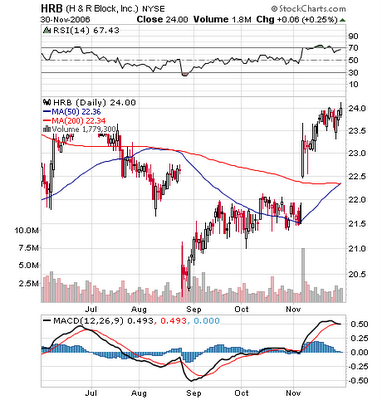
h&r block / hrb desaster reloaded

this data from hrb shows you that the mbs market is finally demanding higher premiums and is doing the due dilligence more seriously! and remember hrb has no option arms! in the options arm segment the picture should be even worse......more on mbs and other warnings http://immobilienblasen.blogspot.com/search?q=mbs


diese date von hrb zeigt eindeutig das der mbs markt wacht endlich auf und verlangt höhere risikoprämien und prüft die angebotenen pakete genauer. und das obwohl hrb keine der riskantesten kredite mit negativer tilgung anbietet. dort dürfte es um einiges schlimmer aussehen......... mehr zu mbs und warnungen http://immobilienblasen.blogspot.com/search?q=mbs


here the details from the warning in september./ hier die fakten zur warnung vom september http://immobilienblasen.blogspot.com/2006/09/update-conference-call-hr-block-hrb.html#links


off course the stock is ways higher (in part due to the sale of anounced sale of "option one") than before the warning in september and afterhours the stock stayed at 24$ after the secound massive warning. wall street is on steroids.........the new guidance is 1,20$-1,45$ (very optimistic and off course ex massive charges!. makes a pe around 18 without charges....! with fundamentals worsening. maybe private equity can makes an offer............please.......)


selbstredend ist die aktie höher als zur letzten warnung im september (teilweise durch die ankündigung des verkaufs von "option one") und der warnung von gestern. nachbörslich weiter stabil bei 24$. wall street ist auf speed.......die neue schätzung beläuft sich auf optimistische 1,20-1,45. natürlich ohne die massiven "sonderbelastungen". macht ex restrukturiereungen ein kgv von 18. inkl. kosten wahrscheinlich eher 30-50!. und das bei sich verschlechternden fundamentals. evtl. kann ja private equity einspringen........


http://biz.yahoo.com/bw/061130/20061130005939.html?.v=1
Mortgage Services revenues decreased to $140.6 million in the fiscal 2007 second quarter from 235.8 million (down 40%!) last year. The decrease was driven by lower originations and by a decrease in gains on sale due to lower than expected loan sale premiums and higher provisions for loan losses. The business posted a pretax loss of $39.0 million versus pretax income of $48.8 million a year ago. (looks like a desaster!!!)


Non-prime loan origination volume was $6.6 billion versus a record $12.2 billion(down 46%) in the year-ago quarter and $7.8 billion (down 15% qoq) in the first quarter of fiscal 2007, as softness in the U.S. housing market and tightened loan underwriting continued to suppress loan volume.

Net gain on sale-gross margin for Mortgage Services was 37 basis points compared with 81 basis points in the fiscal year's first quarter, reflecting losses on derivatives and lower loan sale premiums.

Loan loss provisions totaled 69 basis points in the second quarter due to continued high default rates and greater loss severity. As a result of changes in loss severity estimates, the second quarter provision includes approximately 19 basis points related to production in prior periods.

Option One's mortgage servicing portfolio was $73.0 billion at the end of the quarter

......The company incurred $12.2 million in residual asset impairments, which were recorded as a reduction in gains on sale of mortgage assets in the income statement. The company also realized a net write-up to residuals of $7.6 million in the second quarter, ......

For the first six months of fiscal 2007, revenues decreased to $310.3 million from $540.8 million in the prior year period, and a pretax loss of $44.0 million compared with pretax income of $179.5 million last year.

During the six months, the company reacquired 8.4 million shares of its common stock at a total cost of $186.6 million, or an average purchase price of $22.26 per share.(22.4 mio shares left)/ no further repurchase of shares in the 2nd. half planned!

from their webcastpresentation (pdf) http://media.corporate-ir.net/media_files/irol/76/76888/Presentations/FINAL2Q07EarningsSlides.pdf

the loan to value ratio in their nonprime servicing portfolio is 82%, fico 611, 40 year accounts for 31% of their origination volume, interest only for 14% (page 8)

loan sale repurchase reserve from 0,16% in 2006 to 0,69% (plus 331%!!!!) and up from the guidance of 0,4% just given a few weeks ago. wow!!!!

75% higher than the guidance from september!!!!!!!!!!!! the mbs market is waking up!

update minyanville on hrb earnings
http://www.minyanville.com/articles/index.php?a=11705

Labels: ,